The case involving Julian Assange, the 52-year-old Australian fighting extradition from Britain to the United States, has reached a critical point.
On Tuesday evening AEDT, London’s High Court is set to hand down its ruling on , in what could be his final legal challenge in British courts.
“This is it. DECISION TOMORROW,” his wife Stella Assange posted on X (formerly Twitter) on Monday.
Assange is the figurehead of WikiLeaks, the whistleblowing website that exposed government secrets worldwide, notably the explosive leak of US military and diplomatic files related to the wars in Iraq and Afghanistan.
He has spent over a decade either in custody or holed up in Ecuador’s London embassy, trying to avoid extradition —
Why is Julian Assange in court?
Assange is fighting to overturn an extradition order that Britain approved in 2022.
His first attempt to appeal against the transfer was refused, leading to when his lawyers sought to reverse that judgment.
Two senior judges are set to hand down their ruling at 10.30am London time (9.30pm AEDT).
What are the charges Assange faces?
US prosecutors want to put Assange on trial on criminal charges relating to WikiLeaks’ high-profile release of vast troves of confidential US military records and diplomatic cables.
He faces 18 charges of breaching the American Espionage Act.
If convicted under the Act, he could be sentenced to up to 175 years in jail, although would likely serve considerably less.
What is the US case?
US prosecutors argue the leaks endangered the lives of their agents and there was no excuse for Assange’s alleged criminality.
During the February hearings, lawyers for the US said he was not being prosecuted for publication of the leaked materials, but for aiding and conspiring with former US Army intelligence analyst Chelsea Manning to unlawfully obtain them, then disclosing names of sources and “putting those individuals at grave risk of harm”.
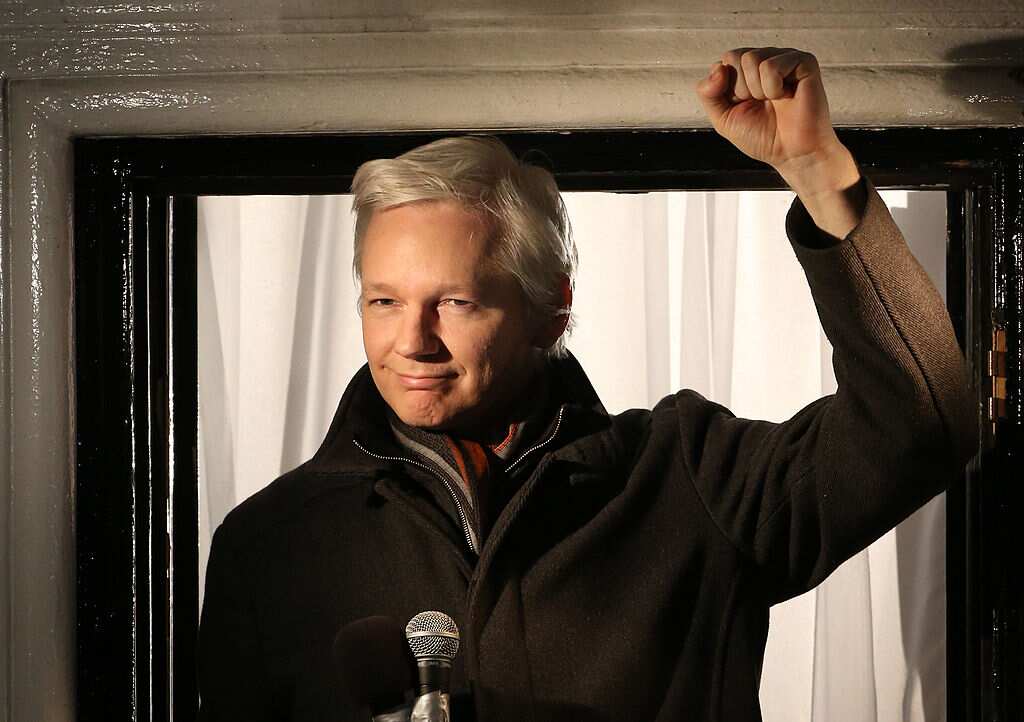
Wikileaks founder Julian Assange speaks from the Ecuadorian Embassy in London in December 2012. Source: Getty / Peter Macdiarmid
What is Assange’s defence?
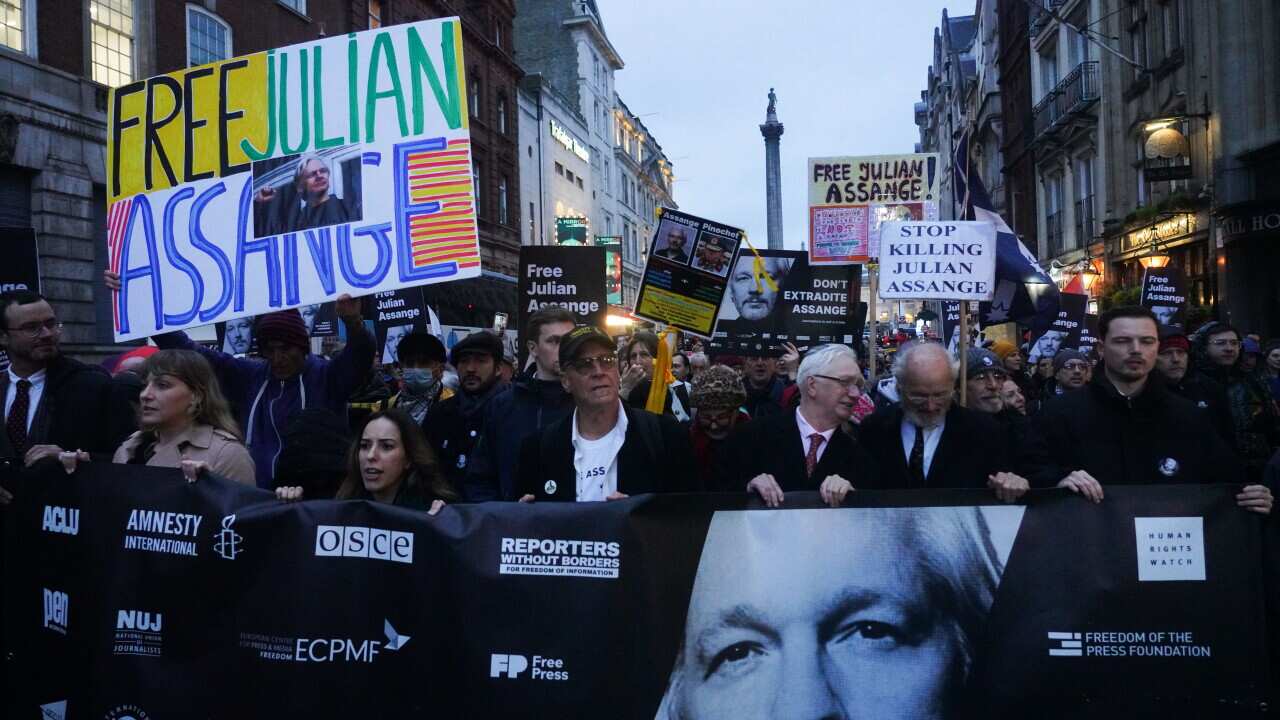
Assange’s supporters hail him as a hero of journalism who is being prosecuted for exposing US wrongdoing.
During the trial, his lawyers said the charges against him were political and that he was being prosecuted “for engaging in ordinary journalistic practice of obtaining and publishing classified information”.
They said Assange was targeted for his exposure of “state-level crimes”.
Assange’s lawyers also argued that the decades-long prison sentence he faces is “disproportionate”, accusing the US of acting in bad faith and contravening its extradition treaty with Britain.
However, lawyers for the US said his prosecution was “based on the rule of law and evidence”.
“The appellant’s prosecution might be unprecedented but what he did was unprecedented,” said Clair Dobbin, a lawyer for the US.
What happens after the High Court ruling?
If Assange wins, a full appeal hearing will be held to again consider his challenge.
If he loses, his last option would be an appeal to the European Court of Human Rights.
Last week, Assange’s US lawyer said his legal team against him following a newspaper report the US Justice Department was considering allowing him to plead guilty to a reduced charge.
– With additional reporting by Agence France-Presse, and Reuters via the Australian Associated Press.