The United States economy unexpectedly contracted in the first three months of the year on an import surge triggered by Donald Trump’s tariff plans, although the president pinned the blame squarely on his predecessor.
The sharp increase in imports was a reflection of businesses and consumers stockpiling foreign goods to get ahead of Trump’s sweeping trade levies, which went into effect earlier this month.
All three major Wall Street indices fell on the economic news, before paring losses to close mixed, while oil prices extended their losses.
At a cabinet meeting in Washington, Trump insisted the growth downturn was the legacy of former president Joe Biden’s policies.
“That’s Biden, that’s not Trump,” he said.
Striking a more positive tone, he highlighted the “whopping” 22 per cent rise in gross domestic investment during the first quarter.
Annual economic growth stayed above 2 per cent in every year of Biden’s presidency, reaching 2.8 per cent in 2024.
The gross domestic product (GDP) of the world’s largest economy decreased at an annual rate of 0.3 per cent in the first quarter, after growing 2.4 per cent in the final months of 2024, according to the estimate from the US commerce department.
This was sharply below the market consensus estimate of 0.4 per cent growth, according to Briefing.com, and marked the first quarterly contraction since 2022.
The commerce department said in a statement the contraction was in large part down to an “upturn in imports,” aided by a decline in consumer and government spending.
A ‘blaring warning’
In a statement, the White House called GDP a “backward-looking indicator”.
White House press secretary Karoline Leavitt said: “It’s no surprise the leftovers of Biden’s economic disaster have been a drag on economic growth.”
“But the underlying numbers tell the real story of the strong momentum President Trump is delivering.”
The GDP figures were published on the 101st day since Trump returned to White House, along with fresh data showing a slowdown in the US Federal Reserve’s favoured inflation gauge last month.
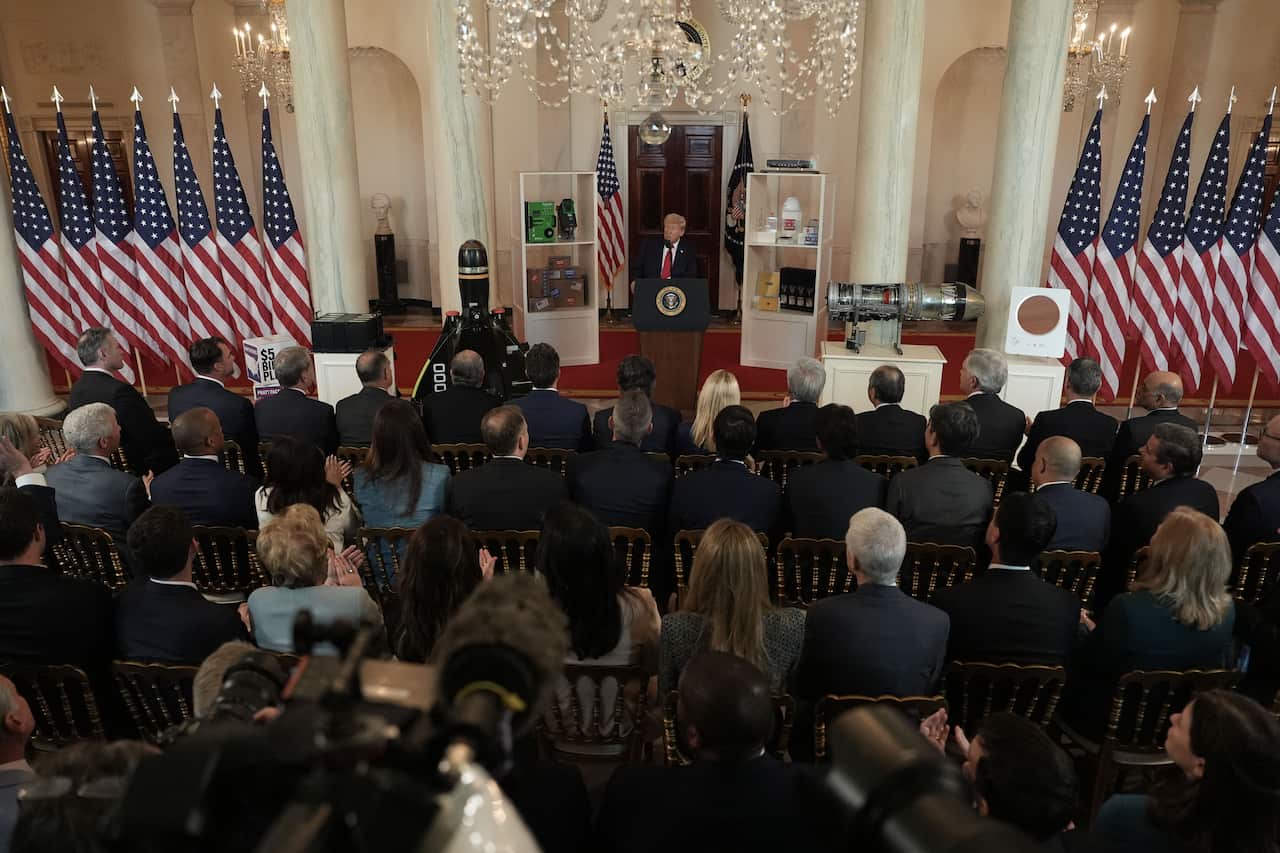
The US economy has unexpectedly contracted in the first quarter, after a surge in imports. Source: ABACA / Pool/PA
Trump’s introduction of sweeping tariffs against most countries sparked a selloff in financial markets, sending volatility to levels not seen since the COVID-19 pandemic.
Senate Democrat Chuck Schumer said in a statement: “This decline in GDP is a blaring warning to everyone that Donald Trump and Congressional Republicans’ failed MAGA experiment is killing our economy.”
Following the dramatic market movements in early April, the Trump administration announced for dozens of countries to allow for trade talks, while maintaining a baseline 10 per cent rate for most countries.
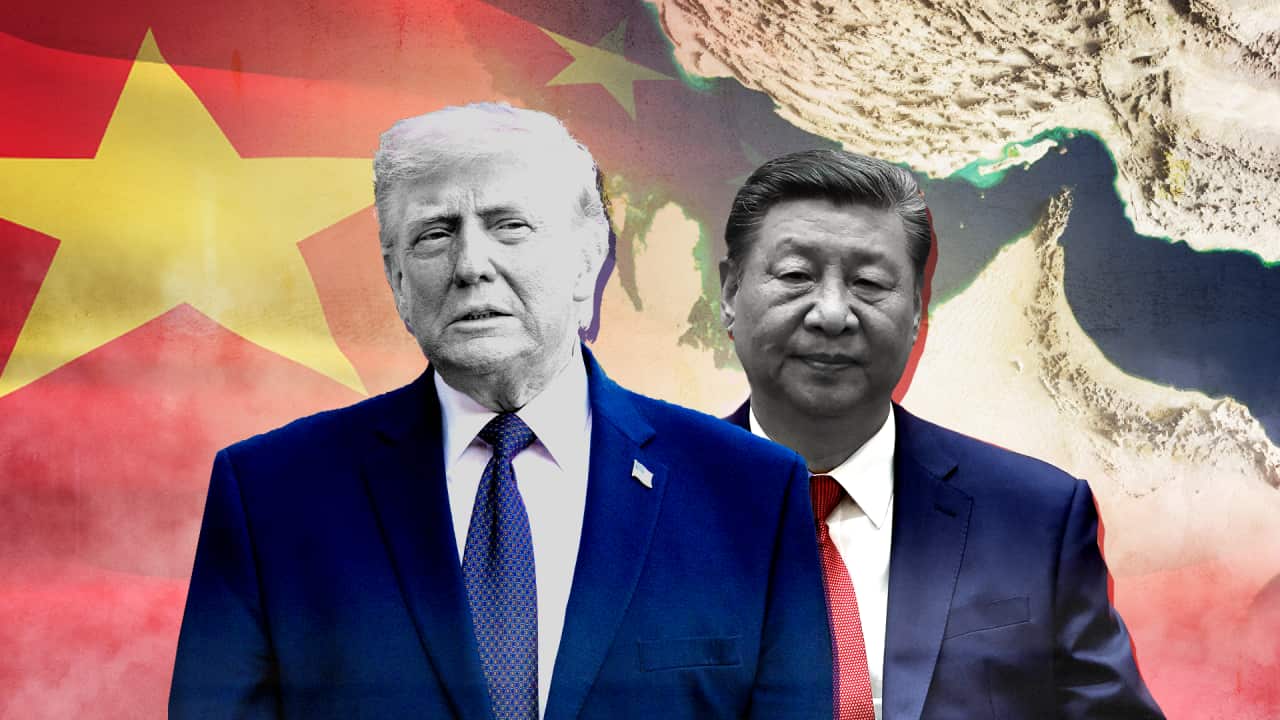
But the administration has also added to the tariffs on China, with the level of duties introduced since January now totalling 145 per cent — with some sector-specific measures pushing levies even higher.
At the cabinet meeting on Wednesday, Trump said China was getting “hammered” by the tariffs, and said he still hoped to make a deal with China, whom he referred to as “the leading candidate for the chief ripper-offer” of America.
“Maybe the children will have two dolls instead of 30 dolls,” Trump said, arguing that the US did not need many of the things China produced.
“And maybe the two dolls will cost a couple of bucks more than they would normally,” he said.
Economists at the US financial services firm Wells Fargo wrote in an investor note the US economy is at a greater risk of recession now than a month ago, “but this 0.3 per cent contraction in Q1 GDP is not the start of one”.
“It reflects instead the sudden change in trade policy that culminated in the biggest drag from net exports in data going back more than a half-century.”
For the latest from SBS News, and .