

[ad_1]
Blasts were heard in Srinagar and Jammu and projectiles and flashes were seen in the night sky over Jammu, similar to the events of the previous evening, according to authorities, residents and Reuters witnesses.
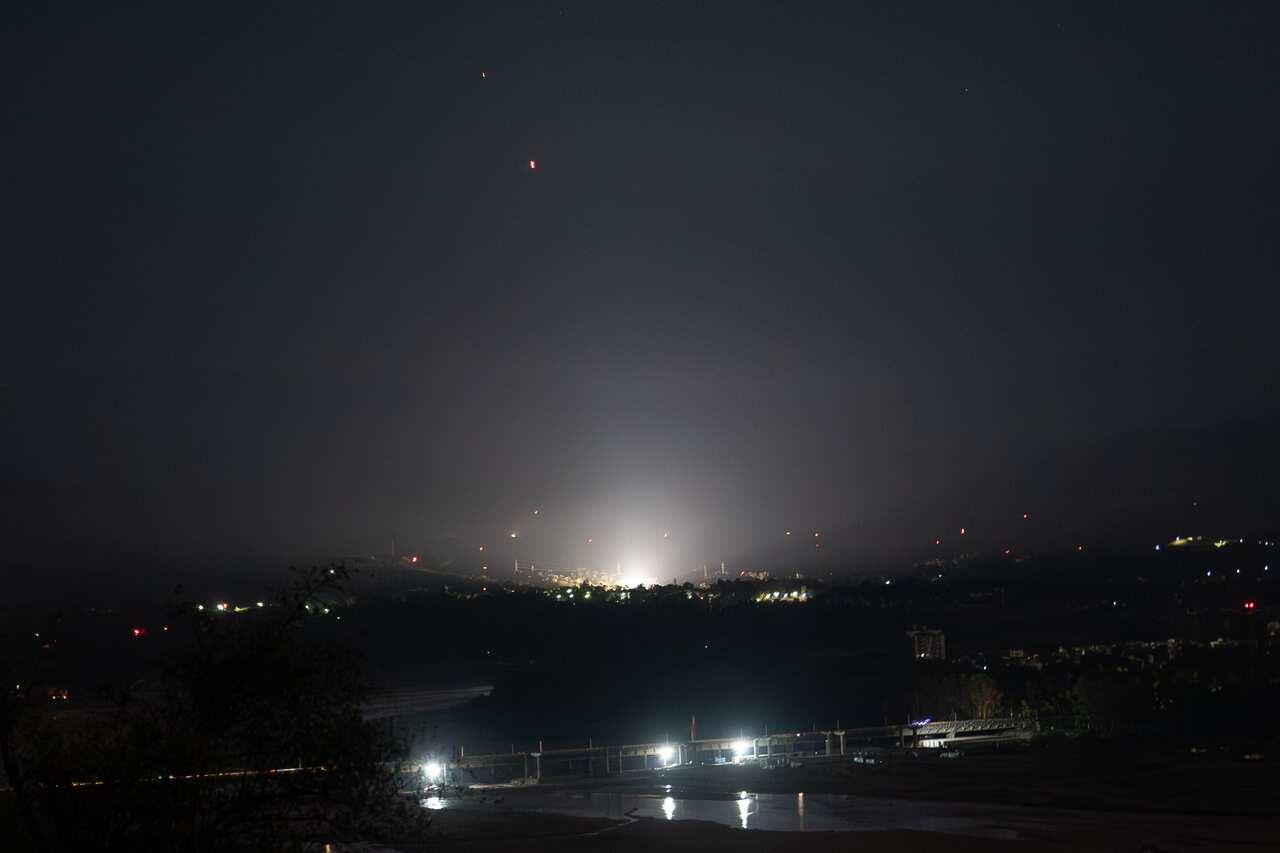
Indian air defence systems activate following the ceasefire announcement, in the city of Jammu, Indian-administered Kashmir. Source: Anadolu / Getty Images
On Saturday, Pakistan and India had agreed to a full and immediate ceasefire after days of deadly jet fighter, missile, drone and artillery attacks which killed more than 60 people and caused thousands of civilians to flee their homes along their border as well as in divided Kashmir.
US secretary of state Marco Rubio said that he and vice president JD Vance had engaged with Indian Prime Minister Narendra Modi and Pakistan’s Shehbaz Sharif, Indian foreign minister Subrahmanyam Jaishankar, Pakistan’s army chief Asim Munir, and the two national security advisers over the course of 48 hours.

Indian defence personnel patrol in New Delhi. Source: Getty / Hindustan Times
In a post on X, Rubio commended Modi and Sharif on the agreement, which he said included not only an immediate ceasefire but also the start of talks on “a broad set of issues at a neutral site”.
India’s foreign secretary Vikram Misri said that both sides would “stop all firing and military action on land, air and sea”.
News of the ceasefire was greeted with relief on both sides of the border, and Pakistan’s airports authority said its airspace had been fully reopened.

Celebrations of the ceasefire agreement in Hyderabad, Pakistan. Source: AAP / Nadeem Khawar / EPA
But reports of violations sparked alarm, with Misri later accusing Pakistan of “repeated violations” and saying the Indian armed forces were “giving an adequate and appropriate response”.
Accusing India of committing its own violations, it said Pakistan’s forces “are handling the situation with responsibility and restraint”.

Residents remove debris and clean up damage caused by an Indian attack in Neelum Valley, Pakistan-administered Kashmir on Saturday. Source: Anadolu / Getty Images
It called for ceasefire issues to be handled “through communication at appropriate levels” and urged troops on the ground to also exercise restraint.
Conflict between the South Asian neighbours reignited on Wednesday, when India attacked what it said was “terrorist infrastructure” in Pakistani-administered Kashmir and Pakistan.
Despite the truce, two Indian government sources told Reuters that the punitive measures announced by India and reciprocated by Pakistan, such as trade suspension and visa cancellations, would remain in place for now.

A man stands inside his damaged house, following overnight shelling from Pakistan in the Dachi village in Uri, in Indian-administered Kashmir. Source: Getty / NurPhoto
The sources also said the 1960 Indus Waters Treaty, a critical water-sharing pact that India suspended after the Kashmir attack, would remain in abeyance.
They have gone to war three times, including twice over Kashmir, alongside numerous smaller outbreaks of fighting.
[ad_2]
Source link