María Corina Machado’s getaway from Venezuela involved a long, “scary” and very wet sea crossing in the dead of night with no lights, according to the man who says he led the operation.
Bryan Stern, who heads a nonprofit rescue organisation in the United States, detailed the mission in an interview CBS News published after the Venezuelan opposition figure emerged in Norway following her Nobel Peace Prize ceremony.
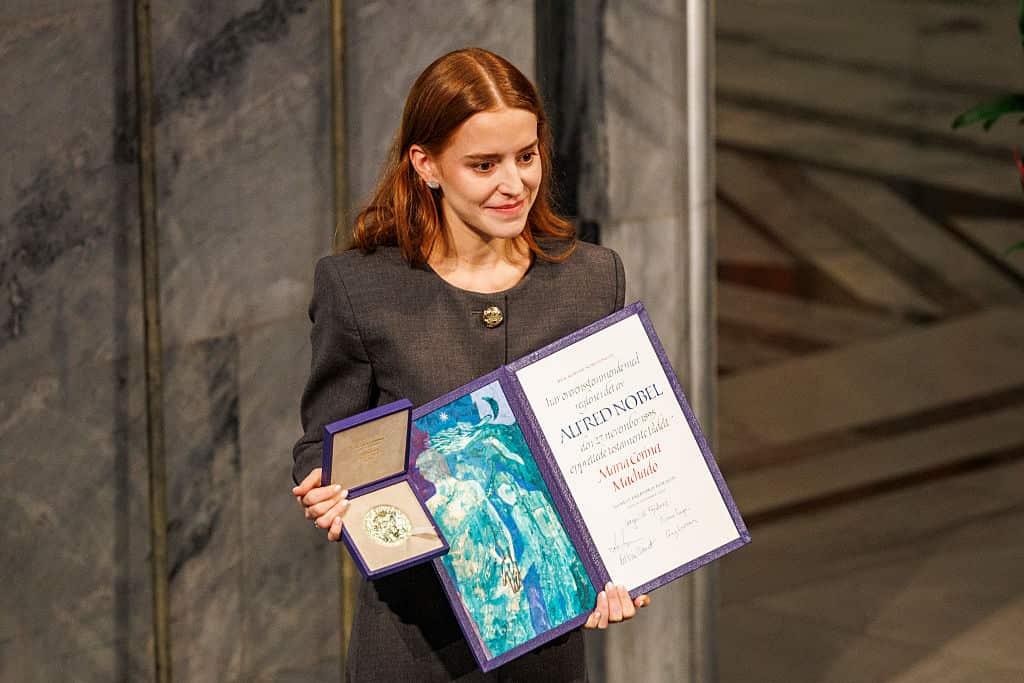
Machado arrived in Oslo in the early hours of Thursday morning local time, missing out on her ceremony by a matter of hours. She was awarded the prize for promoting democratic rights in Venezuela.
“It was dangerous. It was scary,” said Stern, a US special forces veteran, describing dark and choppy conditions that also provided convenient cover for the escape.
He recalled meeting Machado out at sea after she left Venezuela, where she had been in hiding since January fearing persecution by President Nicolás Maduro.
She boarded Stern’s boat for a 13 to 14 hour journey to an undisclosed location to catch a plane as part of a mission planned just four days earlier, according to CBS.
The Wall Street Journal had reported that Machado first travelled from a hiding place in Caracas to a coastal fishing village, and then across the Caribbean Sea to Curaçao.
She reportedly flew from there to Oslo, via Miami.
Machado’s daughter Ana Corina Sosa Machado received the Nobel Peace Prize on her behalf. Credit: Per Ole Hagen/WireImage
Wearing a wig and a disguise, she successfully made it through 10 military checkpoints without being captured during the road journey from the Venezuelan capital to the coast, the Journal reported.
Stern did not divulge details about the land operation, citing his company’s future work in Venezuela.
“The sea conditions were ideal for us, but certainly not water that you would want to be on … the higher the waves, the harder it is for radar to see,” he said.
“This was in the middle of the night — very little moon, a little bit of cloud cover, very hard to see, boats have no lights.
“All of us were pretty wet. My team and I were soaked to the gills. She was pretty cold and wet, too. She had a very arduous journey.
“She was very happy. She was very excited. She was very tired,” Stern said, adding that around two dozen people were directly involved within his team.
Journey supported by ‘generous donors’
A representative for Machado confirmed that Stern’s company Grey Bull Rescue Foundation was behind the operation that began on Tuesday, CBS said.
Stern told CBS the Machado mission was financed by “a few generous donors” — none of whom were US officials.
“The US government did not contribute a single penny to this operation, at least not that I know of,” Stern said.
He said, however, that his group did “unofficially collaborate” with the US military about positioning and plans, largely to avoid being targeted by airstrikes.
Machado said on Thursday that she had US support to leave Venezuela.
She has announced plans to return home, though it is not clear how or when she will do so.
Stern said his group will not be involved in that operation as it only works on getting people out of countries, not in.
“That’s for her to determine and for her to decide. But I think she should not go back. But she wants to. Maria is truly inspirational.”
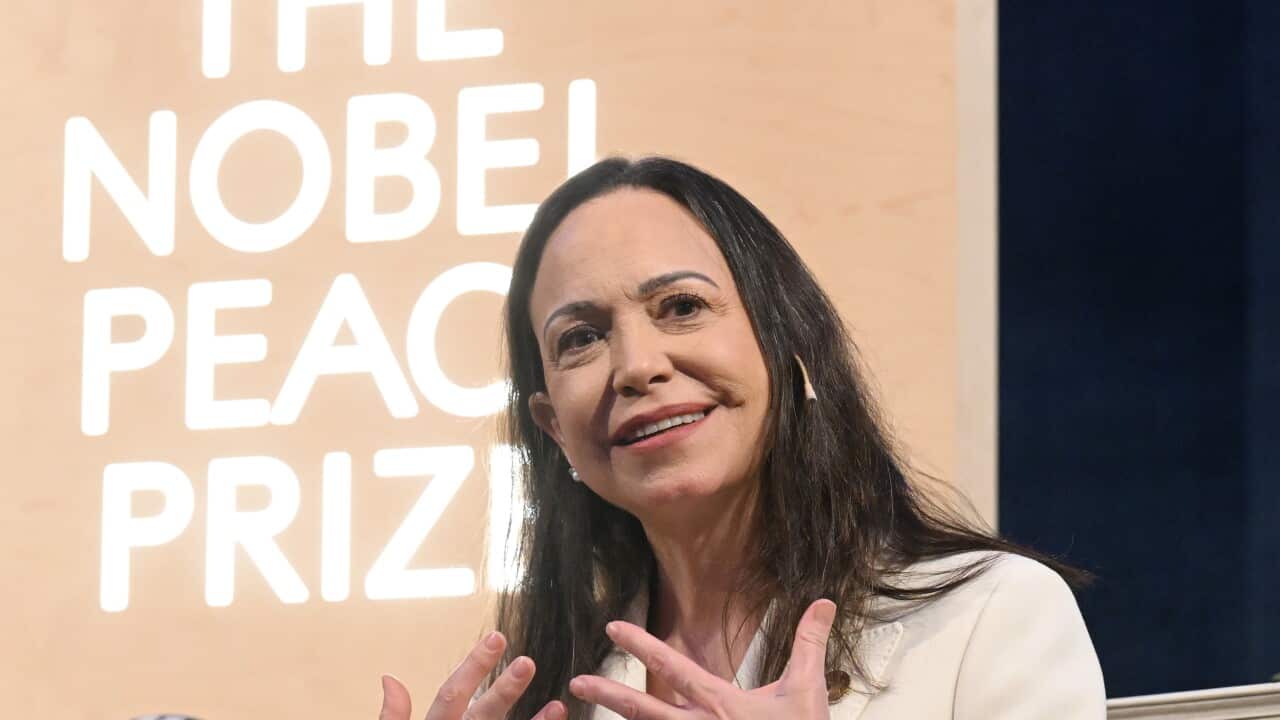
Machado opens up about the toll of her time in hiding
“For over 16 months I haven’t been able to hug or touch anyone,” Machado, a mother of three, told the BBC in an interview after her arrival in Oslo.
“Suddenly in the matter of a few hours I’ve been able to see the people I love the most, and touch them and cry and pray together.”
She said she had missed the graduations and weddings of her daughter and one of her sons while she was in hiding. She had not seen her children in about three years.
In the interview, Machado didn’t deny the Journal’s reporting on her journey, but declined to share any details.
Asked if she planned to return to Venezuela, she said: “Of course I’m going back to Venezuela … What I’ve said to the Venezuelan people from the beginning is I’m going to be in the place where I am more useful for our cause.”
“The place where I believe I have to be today, on behalf of our cause, is Oslo.”