
Australia has been urged to step up its support as the war in the Middle East drives a wave of food insecurity across neighbouring countries amid dwindling fuel supplies.
Humanitarian organisation World Vision has raised concerns about oil reserves in Papua New Guinea and Timor-Leste, while fuel rationing is now in effect across several countries, including Bangladesh and Sri Lanka.
The closure of the Strait of Hormuz has already driven up fuel prices across the region, and is expected to bring inevitable price hikes for food in Australia and beyond.
World Vision is warning of knock-on effects for food security across Asia and the Pacific.
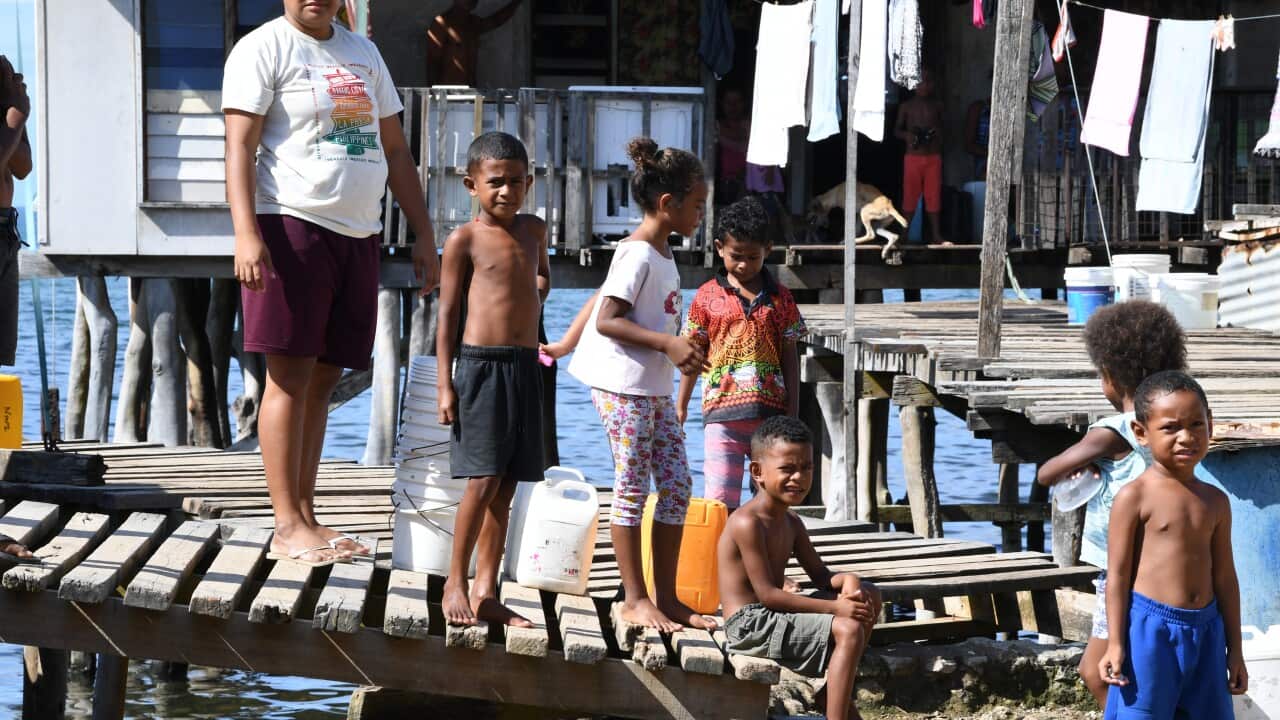
“If you look at a country like Papua New Guinea, where you already have high rates of child malnutrition and even stunting … you can expect to see real impacts downstream on children and the most vulnerable,” World Vision Australia CEO Grant Bayldon told SBS News.
“The impact of increased food prices, we expect, will be really significant across the region.”
Bayldon called on the Australian government to continue its “consistent positive presence in the Pacific” through its aid program.
“Our message to the government is that this isn’t the time to abandon our neighbours when they need our help the most,” he said.
Government ‘looking at what we can do’, Wong says
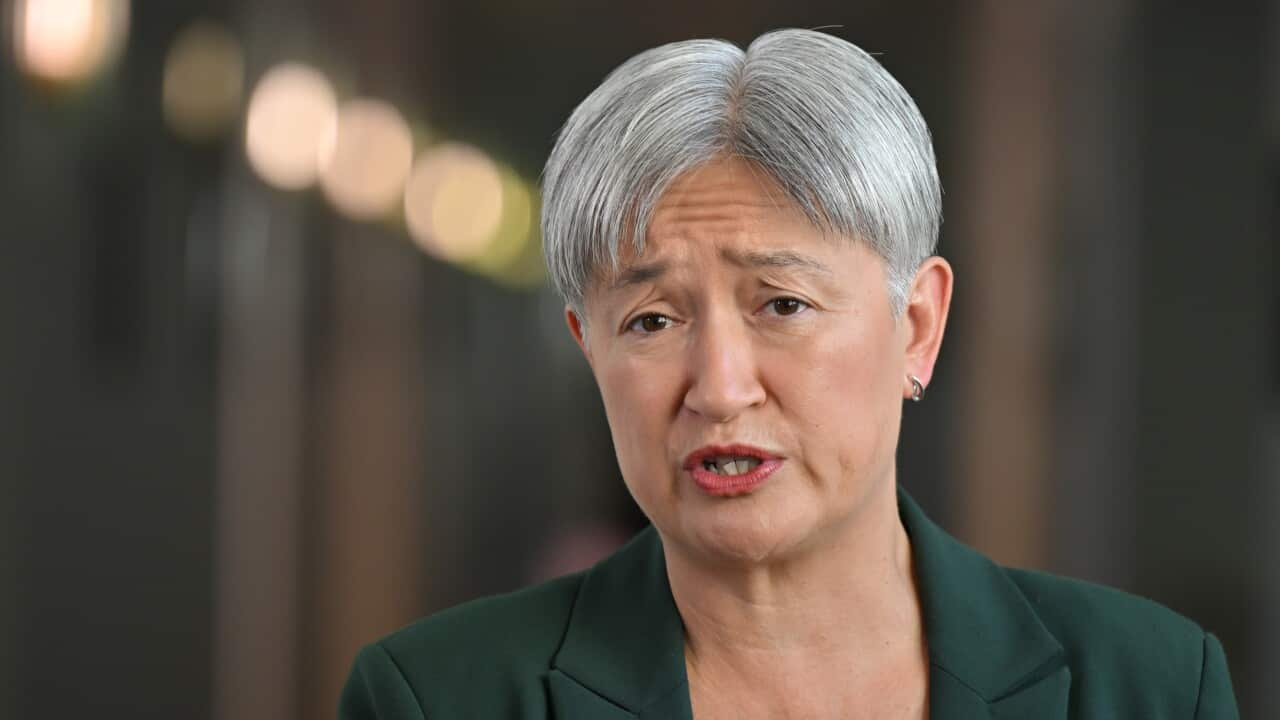
Foreign Minister Penny Wong told SBS News the government was considering how it might help its neighbours, but its priority would be to secure fuel supply for Australians.
“But we are a responsible Pacific partner and we’ll continue to work with them and look at what we can do to support them through this,” she said.
Asked if Australia had an obligation if asked for help, Treasurer Jim Chalmers told SBS News “we work with our friends and partners in the region where we can”, but “our first responsibility and our highest priority is making sure that we’ve got enough supply here”.
The Timor-Leste government announced last week it had approved temporary measures to stabilise fuel prices and ensure supply, including a cap on petrol, diesel and jet fuel prices.
Several Pacific nations have already appealed for help with oil supplies.
Samoa’s Prime Minister La’aulialemalietoa Leuatea Schmidt said he had asked his New Zealand counterpart if it was possible to divert fuel to Samoa if needed.
Tongan Prime Minister Lord Fakafanua said partners including Australia and New Zealand were sharing intelligence with his country to help them prepare for shortages.
‘This is not a distant crisis’
World Vision, which has a presence in 10 countries across South Asia and the Pacific, is warning that the crisis will compound existing vulnerabilities that had been building for years across the region.
“A conflict thousands of kilometres away is now directly threatening the food on children’s tables and the medicine in their clinics,” Bayldon said.
“The children who will be hit hardest are those who were already the most vulnerable — in communities across South Asia, Southeast Asia, and the Pacific battling climate shocks, poverty and inequality long before this crisis began.”
The current predicament is unfolding during the Pacific cyclone season, while typhoon season in South Asia is also looming.
“This is not a distant crisis. It is arriving at the doorsteps of families across our region right now,” Bayldon said.
World Vision has been tracking the impacts of climate shocks displacing residents who have degraded healthy food options.
This is exacerbated by surging fuel and fertiliser costs due to the conflict, with the potential for crucial crops to fail.
Statistics provided by the United Nations’ World Food Programme show an expected 24 per cent increase in food insecurity across Asia, as the price of fertiliser needed to protect crops surges due to supply chain disruptions.
World Food Programme statistics also assert that every 10 per cent rise in South Asian food prices can be linked to a rise of up to 4.3 per cent in child wasting. Child wasting, it says, is a condition that can leave children 12 times more likely to die than those that are well-nourished.
World Vision says many Pacific Islands are now reliant on imported food, which means international price increases can be devastating.
PNG is no stranger to fuel shocks — the country declared a 30-day “national emergency” after a dispute with the country’s largest fuel supplier and the national bank.
For the latest from SBS News, download our app and subscribe to our newsletter.