


IN BRIEF
- 90 per cent of Iran’s oil tankers are loaded in Kharg Island.
- Experts warn that capturing the island might be a deadly operation.
It’s only around double the size of Sydney Airport, but Kharg Island, Iran’s oil “lifeline”, is emerging as a potential first target for US boots on the ground during the ongoing war in the Middle East.
The speculation intensified on Thursday morning, after Iran’s parliamentary speaker Mohammad-Bagher Ghalibaf said that the US and Israel are “preparing for the operation to occupy an Iranian island”, threatening Tehran will respond “if they step out of line”.
This follows multiple media reports, citing sources connected to US intelligence, that the US is sending thousands more soldiers to the Middle East.
Unnamed sources have told Reuters that the troops will be from the US Army’s elite 82nd Airborne Division, which specialises in parachute assaults. The report indicates that the US government has discussed options for deploying ground forces to Kharg Island.
In the meantime, CNN reported that Iran has moved additional military personnel and defence to the island, according to people familiar with US intelligence.
The US administration has refused to rule out any possible operation on Kharg Island, with the US Treasury Secretary, Scott Bessent, telling NBC News that Trump is “leaving all options on the table”.
“What could happen with Kharg Island? We’ll see,” he said.
Iran’s ‘economic lifeline’
Trump’s interest in Kharg Island dates back decades. In 1988, in an interview with the Guardian newspaper, he said that “I’d be harsh on Iran … one bullet shot at one of our men or ships, and I’d do a number on Kharg Island”.
“I’d go in and take it,” he said.
Located approximately 25 km off Iran’s northeastern Persian Gulf coast, Kharg Island has a population of over 8,000. Some Iranians refer to it as “the forbidden island” due to its military restrictions and the confidentiality surrounding it.
What is no secret is the island’s role in handling about 90 per cent of Iran’s oil exports.
“Kharg Island is crucial in the sense that it is one of the main change shipment points for Iranian oil,” Malcolm Davis, senior analyst in defence Strategy at the Australian Strategic Policy Institute, told SBS News.
“Controlling Kharg Island … certainly would put real pressure on the regime in Tehran, because it would cut off their economic lifeline.
“If the Americans could control it, then they potentially could place real pressure on the Iranian regime, but the cost of doing so and the complexity of doing so is going to be high.”
This is not the first time the island has been mentioned during the ongoing war.
About two weeks ago, the US military bombed targets on the Kharg Island in what the US President Donald Trump explained as “one of the most powerful bombing raids in the History of the Middle East”. The Island’s oil infrastructure was not targeted during the attack.
A ‘threat’ or a ‘gamble’?
Experts warn that an operation to capture the Persian Gulf island might be more complex than the previous attack and could have dangerous consequences for the US.
“The challenge is that they would be under constant attack from the Iranian mainland using drones, missiles, and even artillery,” Davis said.
“It would be a potentially high-risk operation that could see significant US casualties.”
David Smith, associate professor at the United States Studies Centre at the University of Sydney, said the number of casualties is not “the only threat” the US might be facing.
“The other threat is that Iran could retaliate against other energy facilities throughout the Middle East, and this is what it’s already promised to do.
“Even if the United States successfully seizes Kharg Island with no casualties, there’s a real risk that Iran could widen the war further.”
Last week, Iran targeted energy facilities in the region, striking a site linked to QatarEnergy, the world’s second-largest LNG exporter. The strikes occurred after Iran issued evacuation warnings for several oil facilities in Saudi Arabia, the UAE, and Qatar, following attacks on its own energy infrastructure in South Pars and Asaluyeh.
Development around Kharg Island is underway amid contradictory reports of possible negotiations between the countries. While US officials say there are “productive” ongoing talks, Iranian officials have denied any negotiations.
It has been reported that Iranian officials are reviewing a 15-point US proposal to end the war.
Iran’s foreign minister, Abbas Araghchi, said Iran has no intention of holding talks with the US and that communication with the US through third parties “does not mean negotiation” is taking place, adding that Iran’s policy is “continuing resistance”.
Davis said that capturing the island is “a significant gamble” that Trump might take as “the negotiation path seems dead in the water”.
“Certainly, the Americans and the Israelis can continue with airstrikes on Iranian targets, like missile systems and so forth. But ultimately that’s not going to win the war,” he said.
“This is very much a gamble to see if they can find a way out of this war that delivers some sort of victory to the Americans.”
Smith said the military buildup surrounding the island might also be used to help the US in the negotiations.
“Trump is, first of all, trying to use this as a threat for leverage in negotiations,” He said. “I think that Trump wants to be able to make the threat that the United States could seize Kharg Island.”
The Start of Hormuz factor
Experts say Kharg Island could also play a role in addressing a major challenge facing the US, more than 600 kilometres southeast in the Strait of Hormuz.
Since the start of the war, the traffic through the waterway carrying about a fifth of the world’s oil and gas has been down 95 per cent, as Iran has begun attacking and threatening ships attempting to pass through this route.
Economists are warning of potential long-term economic pain worldwide, as fuel prices have skyrocketed.
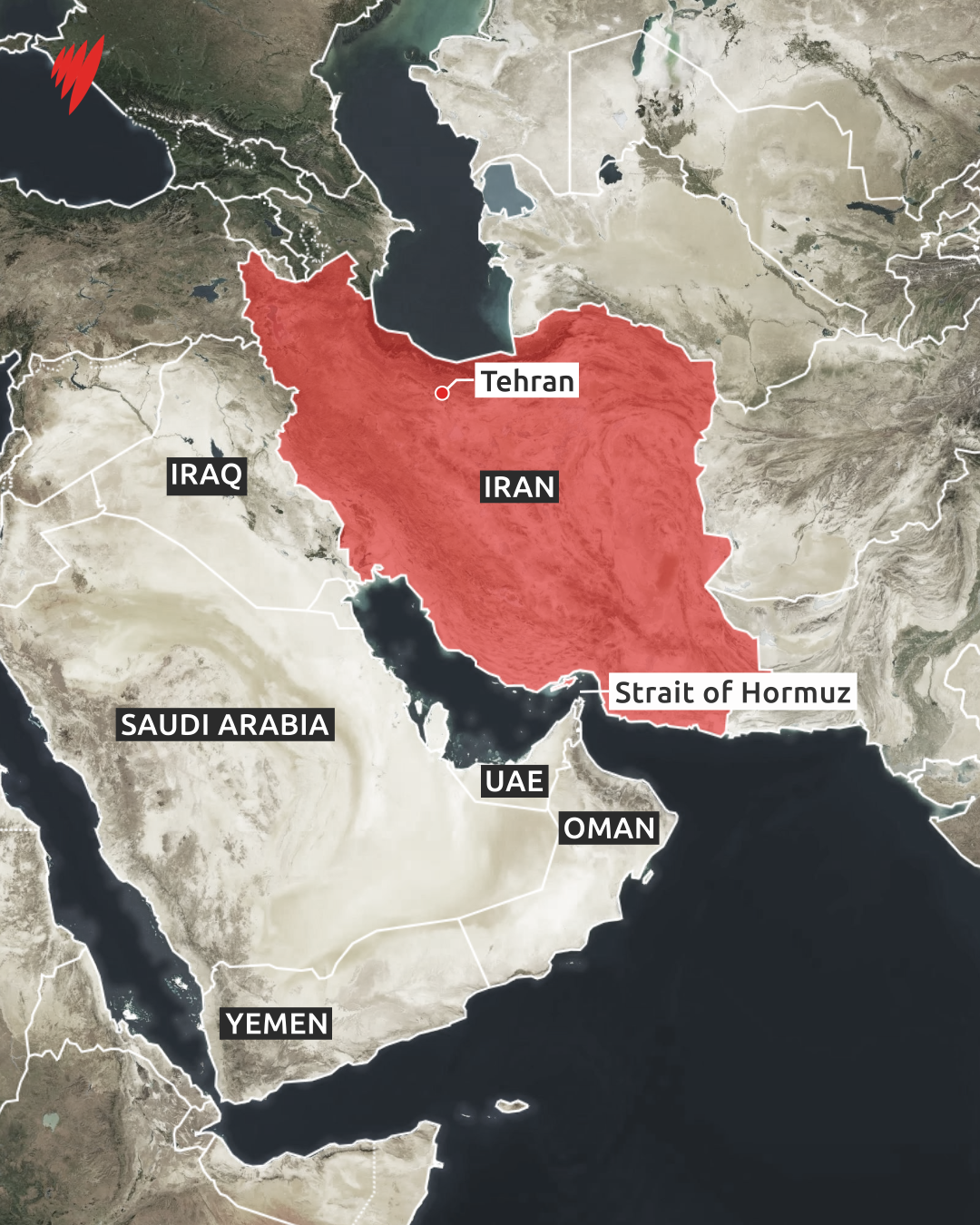
“Physically, they are not close to each other, and so militarily, that won’t do anything to unblock the Strait of Hormuz. It would have to be a negotiating tactic,” Smith said.
“Trump might see it as a way of trying to force the Iranians to unblock the Strait of Hormuz, saying, ‘we will hold onto Kharg Island for as long as you block the Strait’.”
On Sunday, Trump threatened to bomb Iran’s “power plants, starting with the biggest one first” if access in the strait wasn’t fully restored within 48 hours, but then he said he has postponed the strikes for five days, announcing the country has had “strong talks”.
On Thursday, White House press secretary Karoline Leavitt told reporters that if Iran “fail to understand that they have been defeated militarily and will continue to be, President Trump will ensure they are hit harder than they have ever been hit before”.
What could happen next?
Davis said if the US were to seize Kharg Island as a negotiating tactic, the move might start a new chapter in the war.
“From the Trump administration’s perspective, they’re running out of options because the continued air operations are not forcing the Iranians to open up the Strait of Hormuz,” he said.
“I think that they are probably going to be forced to consider a ground incursion, but ultimately it may not work. And then they have a dilemma … Then what is their next move?
“[Then] they either just simply declare victory and accept the fact that actually they’ve failed, and that would be sort of catastrophic for US credibility, or they escalate.”
He said it’s unclear what escalation would involve.
“Would it be larger ground force incursions? [It] is a possibility.”
For the latest from SBS News, download our app and subscribe to our newsletter.