
When missiles started flying, Ruby Ayass knew there was one place her family needed to go, but it wouldn’t be easy to get there.
Ayass is a Lebanese Australian living near Beirut and teaches at a school in Lebanon’s south, and she says the sounds and signs of warfare are all-too familiar.
She was about to go to bed when she heard the news that the Iran-backed militant group Hezbollah had attacked Israel, dragging Lebanon into the rapidly expanding war in the Middle East, which began with the United States and Israel launching strikes on Iran on Saturday.
Hezbollah began firing rockets and drones at Israel at midnight on Sunday in retaliation against the US-Israel killing of Iranian supreme leader Ali Khamenei. Israel has since traded fire and additionally launched a ground invasion in Lebanon’s south.
“We knew something would happen, we just don’t know to what extent,” Ayass told SBS News.
Around 2am on Sunday, she received messages that the international school where she teaches would be closed on Monday.
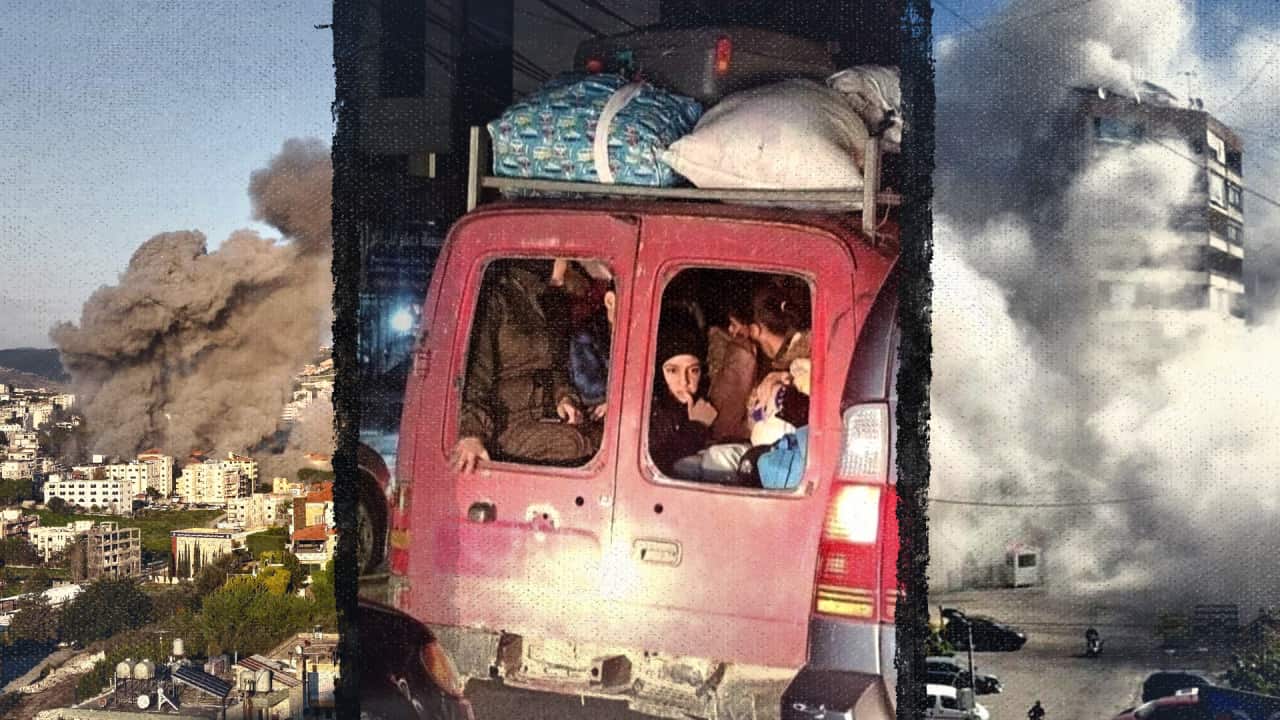
She looked out the window and saw roads jammed with traffic as people fled the city.
“The night that this all started, we were sort of scrambling, messaging, calling, trying to get in contact with each other, making sure everyone was okay till the early hours of the morning,” Ayass said.
“It is scary, but everyone sort of just clicks into the mode of, you know, they know what to do to take care of themselves.”
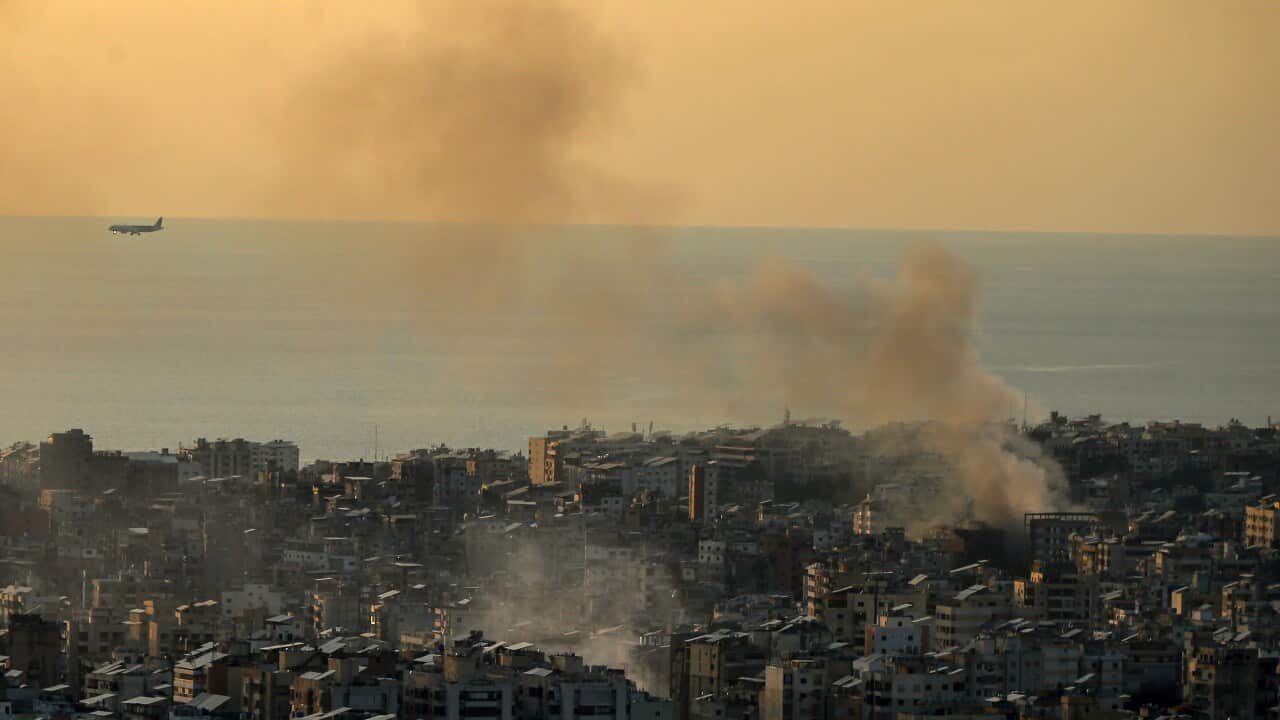
One of Ayass’ friends tried to drive out of the city that night, but just as he was on the road, Israel launched strikes on the southern suburbs of Beirut, widely considered a Hezbollah stronghold.
“The traffic was too much, they couldn’t go so they literally had to go back home, spent the night in their house, in the dark here, waiting for the bombings to finish, and then he was able to leave the next day in the morning,” she recalled.
According to Lebanon’s health ministry, at least 39 people were killed and over 140 were injured during Israel’s bombings on Lebanon.
Ayass knew she and her family needed to pack up and go to their safe haven — a summer house in a small village in Bazaoun, where her husband grew up.
It is hidden in the mountains and had become a shelter for them during the past few years of conflict.
The house was covered with snow when Ayass arrived on Tuesday, and during the day it can be as low as two to three degrees Celsius.
As she settles into the new location, Ayass has found her phone flooded by messages from Australia every morning when she wakes up, as people check in and ask if she is okay.
Some have also reached out to Ayass to check on other families they knew in Lebanon.
“So that’s usually [what I do on] the first half an hour of the morning: getting back to everyone in Australia,” she said.
Ayass and her family moved back to Lebanon in May 2024 and lived through the hostilities between Israel and Hezbollah after 7 October 2023, including numerous airstrikes and the Israeli ground invasion of Lebanon in October 2024.
“There needs to be a solution to the constant merry-go-round, especially for the people, for civilians living here,” she said.
The Hezbollah-Israel conflict since 2023
After the Hamas-Israel war began in October 2023, the Iranian-backed Hezbollah launched attacks across the Israel-Lebanon border, and the two exchanged fire all the way through 2024.
In September 2024, Israel killed Hezbollah leader Hassan Nasrallah during an airstrike.
Following a US-brokered ceasefire agreement in November 2024, Israel began to withdraw its troops from Lebanon.
In late November, Israeli authorities said at least 73 Israeli soldiers had been killed in northern Israel, the Golan Heights, and in combat in southern Lebanon, while Hezbollah strikes had killed 45 civilians in northern Israel and the Israeli-occupied Golan Heights.
The Lebanese health minister said in December 2024 that Israeli attacks on Lebanon since October 7 had killed 4,047 people and wounded 16,638 others.
However, the late-2024 ceasefire did not bring lasting peace on the streets of southern Beirut, with Israel carrying out additional airstrikes throughout the year, including one in November that killed Hezbollah military chief Haytham Tabtabai and four other military officials.
‘We’ve been through it a thousand times’
Despite intense conflict returning to the country, Ayass has decided to stay in Lebanon.
“I get asked that question a lot, ‘when are you coming back?’, especially during the last war. I think a friend of mine and I were probably the only Aussie families in our area,” she said.
“And it feels a lot worse this year because it happened really suddenly.”
“No, I don’t believe I will go back. I’ve got a job here. My kids have a life here. And as all Lebanese Australians know, we’ve been through it a thousand times over. It’s been a lot worse than this.”
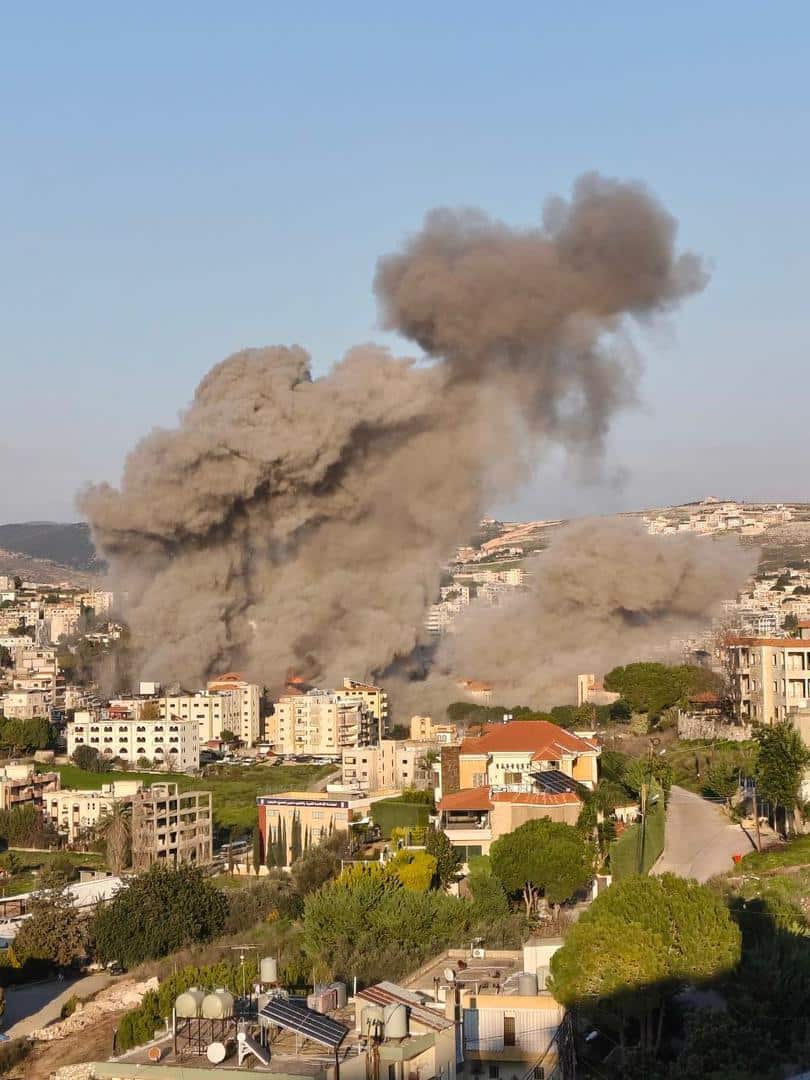
She recalled the moment when her Year 7 and Year 8 students returned to their classrooms last year, after the ceasefire between Israel and Hezbollah was extended.
“The resilience [was] in even just young people … and that age is hard because they understand everything, they see everything, they’ve got social media, they’ve got all of that. They had questions here and there, but at the same time, we were all going through the same thing,” she said.
“So I think out of that trauma, there’s unity, and that unity is a lot stronger than what we’ve been going through.”
— This story has been produced in collaboration with SBS Arabic. Additional reporting by the Reuters news agency
For the latest from SBS News, download our app and subscribe to our newsletter.