Key Points
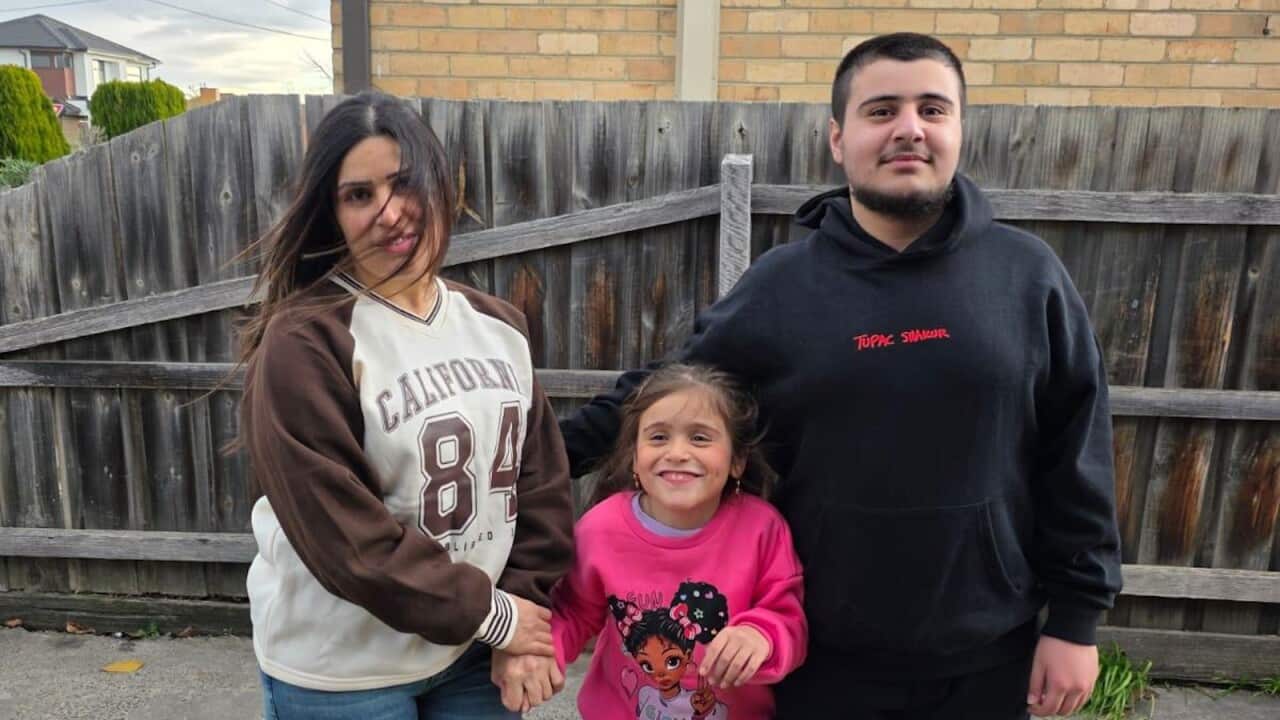
- Iman Nayef and her three children travelled to Tyre in southern Lebanon days before the war in the Middle East broke out.
- She says her daughter needs to return to Australia for a medical procedure.
What started as a long-awaited trip to visit family overseas in Lebanon has become a nightmare for Iman Nayef.
Earlier this month, the Melbourne woman and her three children travelled to Tyre, about 80km south of Beirut, to see her relatives for the first time in more than two years.
She arrived just days before Lebanon was drawn into the war in the Middle East, after the Iran-backed Lebanese group Hezbollah attacked Israel in response to joint United States and Israeli strikes on Iran that killed its supreme leader, Ayatollah Ali Khamenei.
As Israel and Hezbollah have continued to exchange strikes, Israel has focused many of its attacks on Beirut and Lebanon’s south, where Hezbollah are believed to be predominantly based.
Tyre is one part of southern Lebanon that Israel has bombed in the past two weeks, and has been subject to mass evacuation notices by the Israeli military.
Last week, the International Federation of the Red Cross and Red Crescent said it was “outraged” by the killing of a volunteer Lebanese Red Cross paramedic, Youssef Assaf, in Tyre.
The organisation said Assaf had been “carrying out his humanitarian duty to assist and save lives” when he was hit by an Israeli strike, later succumbing to his injuries.
Israel’s military offensive in Lebanon has killed more than 800 people, with Lebanese authorities saying more than a million people have registered as displaced.
This week, Israel said it had launched ground operations against Hezbollah in southern Lebanon.
“It’s very bad here. It’s dangerous. We’re not safe. Everything is scary,” Nayef told SBS Arabic, adding that she and her children have seen people who have sustained injuries.
“My kids are scared,” she said. “Even me, I’m scared. I didn’t sleep for days, me and my kids.”
Nayef said she has been unable to relocate the family to a safer area amid the fighting, as the roads are unsafe.
Nayef and her family were originally planning to come back to Australia at the end of April, but are now trying to return more urgently. But while commercial flights are still leaving from Lebanon’s sole airport in Beirut, Nayef says the cost is prohibitively high.
She said she received a quote of $19,000 for her family of four: one from Qatar Airways and one from Etihad. One quote she received directly through the airline, and another through a travel agent.
She said she has since been able to negotiate the price down to $17,600 — but that’s still much more than she can afford.
Daughter requires medical care
For Nayef’s family, it’s not just about escaping the violence in Lebanon: her daughter also requires medical care.
The child previously underwent surgery in Australia to address a leg length discrepancy, and still has metal supports in her leg and hip.
Back home in Melbourne, Nayef’s daughter is on a waitlist to have the metal in her leg and hip taken out. Without treatment, she says the condition can affect how her daughter walks.
Nayef said her daughter’s medical condition has also made staying in shelters or schools difficult.
“She has a medical condition. She needs to go back,” Nayef said.
Nayef says she has contacted the Australian embassy for assistance, but hasn’t received a response.
Last week, the Department of Foreign Affairs and Trade (DFAT) said it had directed all non-essential Australian officials and their dependants in Lebanon to leave due to the “deteriorating security situation”.
It said a small number of Australian officials remained in Lebanon to provide essential consular services.
In a statement, a Department of Foreign Affairs and Trade spokesperson told SBS News: “Commercial flights continue to depart Lebanon. Australian residents in the region who wish to leave are urged to secure a seat on flights available, which remains the fastest option to leave.”
The war in the Middle East has caused widespread flight disruptions across the region, shutting down airspace in several countries.
Many Australians passing through the popular transit hub of Dubai in the United Arab Emirates were left stranded in the days immediately following its outbreak.
Foreign Minister Penny Wong said earlier this month that the “overwhelming majority” of Australians who were trapped in transit this way have now returned home, after temporary airspace reopenings allowed citizens to come back on commercial flights.
But Nayef, stuck in southern Lebanon with her children with no immediate end to the conflict in sight, feels she’s out of options.
“I need to go back to Australia with my kids safe,” she said.
— This story was produced in collaboration with SBS Arabic.
For the latest from SBS News, download our app and subscribe to our newsletter.