
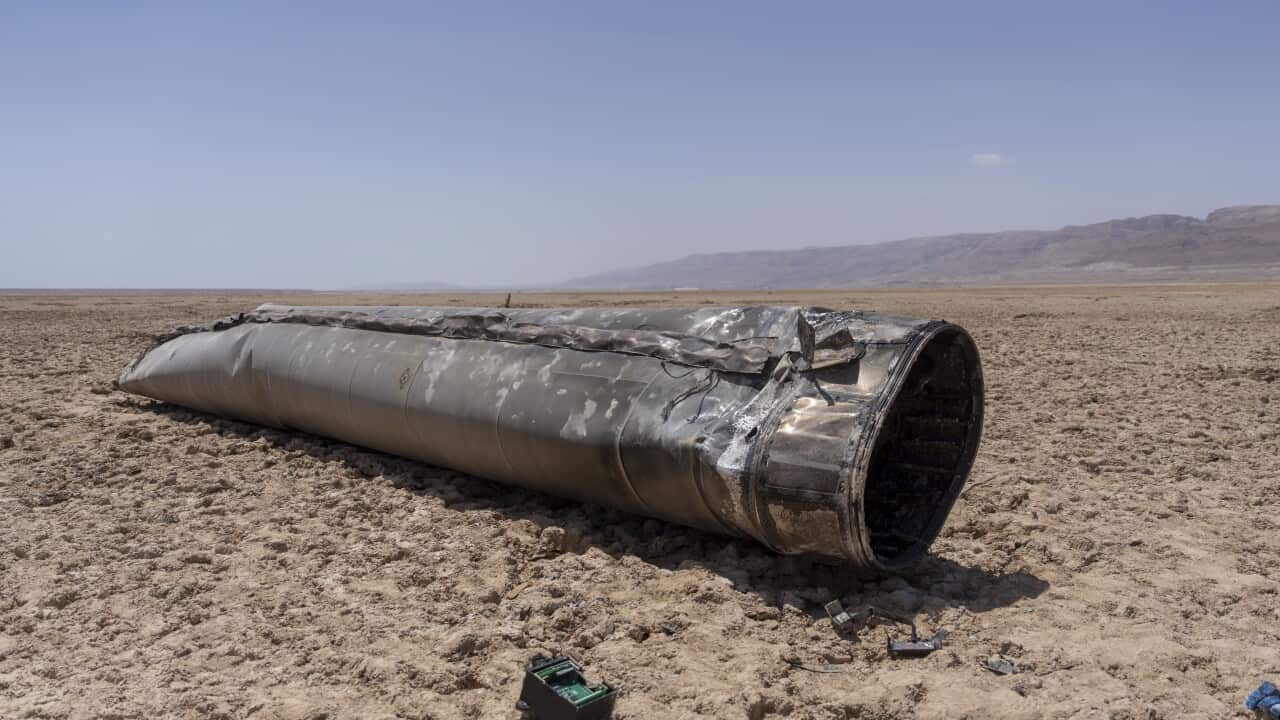
Iran fired two ballistic missiles on 20 March at the Indian Ocean island of Diego Garcia, which hosts a strategically important joint United States-United Kingdom military base, according to US, UK and Israeli officials. One missile broke apart during flight, and the other appears to have been destroyed by US missile defences.
Iran has denied responsibility for the launches.
Diego Garcia is about 4,000km from Iran, which is about twice as far as the top range Iran has declared that its ballistic missiles have.
Parts of Western Europe, Asia and Africa lie within a 4,000-km radius of Iran, raising concerns about the vulnerability of these areas.
However, there’s no evidence that Iran has developed a new type of missile or that it can otherwise hit targets at the longer range. Iran most likely modified an existing type of missile, but increasing a missile’s range poses significant challenges.
So, how far can Iran’s ballistic missiles reach and should we be concerned?
Ballistic missile basics
A ballistic missile is launched on a rocket and, after separating from it, subsequently flies mostly under the influence of gravity to its destination. The name refers to the characteristic arc of projectiles whose trajectories are largely shaped by gravity. The range of these missiles is determined by the size of the rocket.
Short-range ballistic missiles can fly about 500km to 1,000km and can be launched from mobile trucks. They are used for destroying key defensive infrastructure such as radars.
Medium-range ballistic missiles have ranges of about 1,000km to 3,000km. They are used to attack more strategic targets such as command and control centres where military leaders coordinate operations. Intermediate-range ballistic missiles operate over about 3,000km to 5,500km, putting much larger geographical regions at risk.
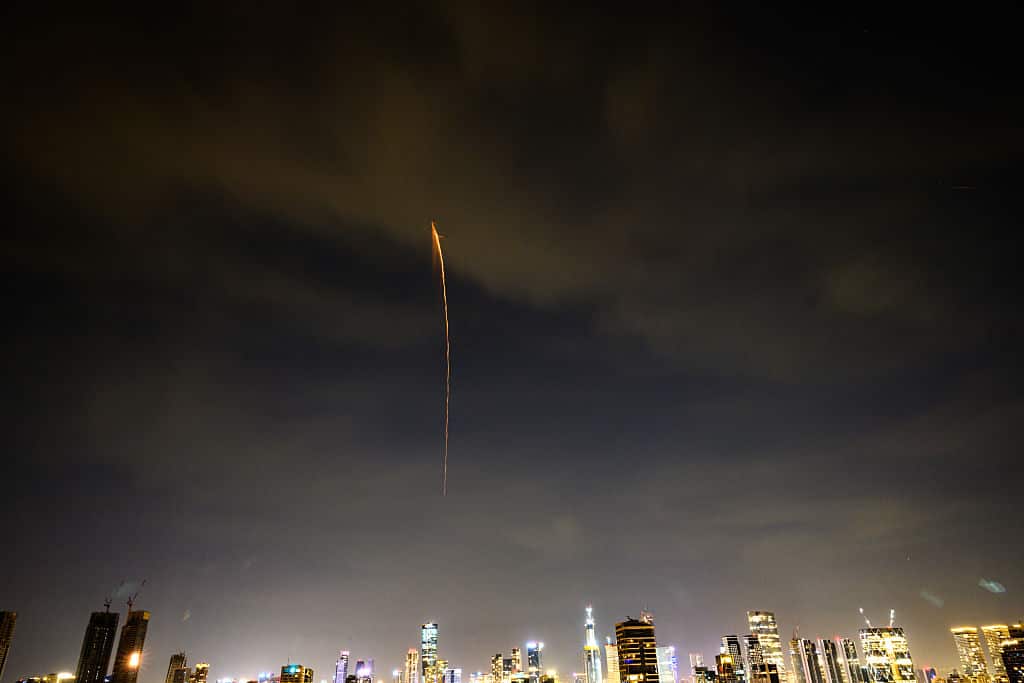
Intercontinental ballistic missiles, or ICBMs, have a range of about 5,000km to 10,000km, making it possible to strike targets over an enormous area. These very long-range weapons require multiple rocket stages. They fly very high, exiting the atmosphere and entering into space, before arcing back toward Earth.
At the height of the Cold War, both the Soviet Union and the US had thousands of ICBMs armed with nuclear warheads aimed at each other. Each weapon could obliterate an entire city, and nuclear-armed ICBMs have been the basis of mutually assured destruction in which both sides were deterred from ever using the missiles.
Iran’s inventory
Iran has an extensive ballistic missile program. The country has been developing a number of short-range ballistic missiles for many years. The suite of weapons includes the Fateh, Shahab-2 and Zolfaghar systems.
The ranges of these missiles — up to 800km — are insufficient for Iran to use them against Israel directly because the closest distance between the two countries is about 900km. However, Iranian-backed militias have deployed these weapons in neighbouring countries, such as Lebanon and Syria, and have launched them from there in attacks against Israel.
Iran has also developed intermediate-range ballistic missiles such as the Shahab-3, Sejjil and Khorramshahr weapons. These missiles have ranges of up to 2,000km, which means they can reach Israel directly from Iran.
Harder to go farther
Scaling up from short-range to medium-range to intermediate requires larger and larger rockets, which presents a number of increasingly difficult technical challenges. Larger rockets create more dynamic vibrations that the missile structure and all its components must survive. This requires an advanced manufacturing and testing infrastructure.
The size of the rocket also determines how much payload the missile can deliver. This challenge is very well-illustrated by the enormous Saturn V rocket that took astronauts to the Moon. Of the total launch mass, less than 2 per cent was delivered to the lunar surface, with propellant taking up almost all the remaining mass.
ICBMs also have a small payload mass, and this in part explains why militaries more often load them with nuclear warheads than conventional chemical explosives. Kilo for kilo, nuclear warheads produce much larger effects. It is usually not worth the very high cost of sending an ICBM many thousands of kilometres just to blow up a single building.
Finally, maintaining control of the missile and hitting a target with sufficient accuracy becomes increasingly more difficult as range is extended. Missile navigation systems based on gyroscopes have slight errors that increase with time, and GPS-guided missiles can be jammed.
Limits on Iran’s reach
Having successfully launched satellites into space using two-stage rockets, however, perhaps it is not too surprising that Iran has been able to build on those successes to achieve longer ranges for its missiles. The simplest modification to extend a missile’s range is to reduce its payload.
Iran has reportedly demonstrated this with the Khorramshahr, using a smaller warhead that gives it a range of 3,000km. Some observers suggest that the missiles Iran fired at Diego Garcia most likely were further-modified Khorramshahrs.
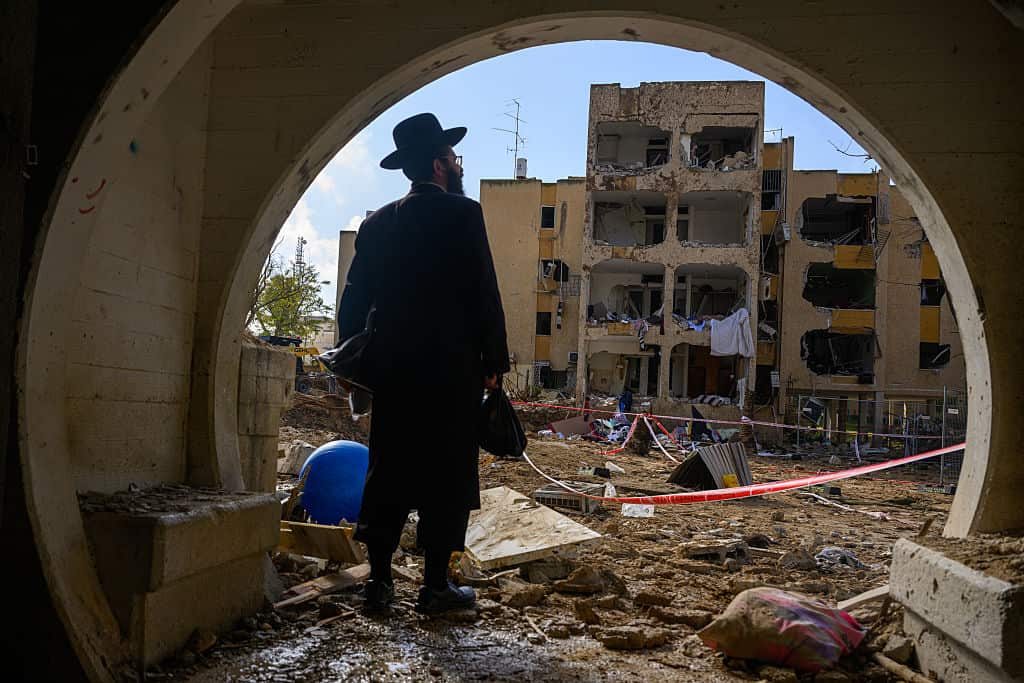
In the Iranian attack on Diego Garcia, however, one of the missiles failed in flight and the other appeared to have been destroyed by US defences. The missile failure may indicate that Iran is attempting to operate these systems at distances they are not reliably capable of.
The apparent ability of the US to defend against the second missile suggests that the Iranian intermediate-range ballistic missiles do not pose a significant military threat. This conclusion is further supported by the earlier high-volume attack by Iran in December 2025 when it launched hundreds of missiles and drones in a concerted raid against Israel. Almost all were shot down by a combination of Israeli and US defences.
Surprising but not so threatening
Ultimately, while Iran’s long-range attack on Diego Garcia caught the world off guard, it was likely intended more for its psychological and political effects than for posing a real military threat.
It is worth noting that an additional challenge with fielding intermediate-range ballistic missiles is the cost, which scales with the size of the rocket required. A two-stage rocket that can fly 4,000km is probably one of the most expensive weapons that Iran possesses. It is therefore unlikely to have many of them. When launched in small salvos, these missiles are highly susceptible to the sophisticated air defence systems of the US and its allies.
Still, the attack has certainly gotten the attention of the world and may increase pressure for diplomatic approaches to end the conflict with Iran quickly.
Iain Boyd is the director of the Center for National Security Initiatives and a professor of aerospace engineering sciences at University of Colorado Boulder.
For the latest from SBS News, download our app and subscribe to our newsletter.