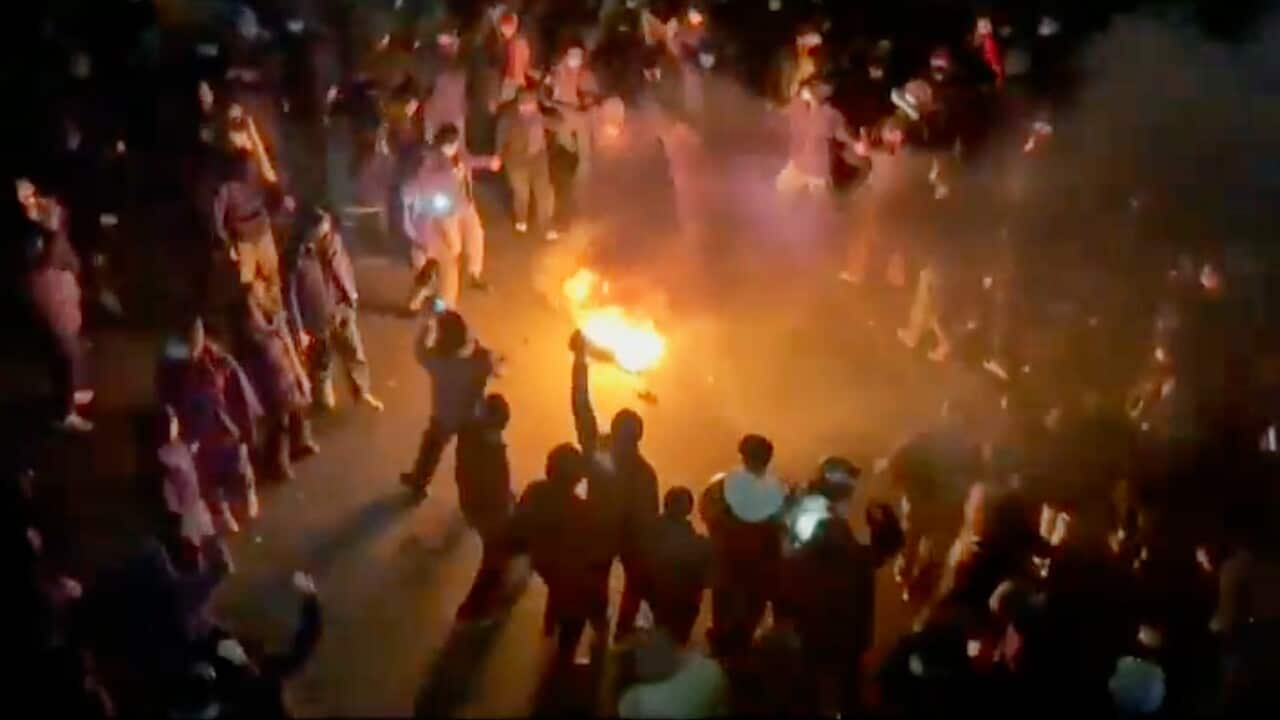
A violent crackdown on a wave of protests in Iran has killed at least 648 people, a human rights group said on Monday, as Iranian authorities sought to regain control of the streets.
Human rights groups are warning an internet blackout, which monitor Netblocks says has lasted more than three-and-a-half days, is aimed at masking the extent of the bloodshed.
The Norway-based NGO Iran Human Rights (IHR) said it had confirmed 648 people killed during the protests, including nine minors, and thousands more injuries, but warned the death toll was likely much higher — “according to some estimates more than 6,000”.
IHR added that the internet shutdown made it “extremely difficult to independently verify these reports”.
It said an estimated 10,000 people had also been arrested.
“The international community has a duty to protect civilian protesters against mass killing by the Islamic republic,” said IHR director Mahmood Amiry-Moghaddam.
Despite the blackout severely affecting Iranians’ ability to post videos of the protests, which have rocked big cities since Thursday, one video geolocated by Agence France-Presse showed dozens of bodies outside a morgue south of Tehran, with what appeared to be grieving relatives searching for loved ones.
Over two weeks of demonstrations initially sparked by economic grievances have turned into one of the biggest challenges yet to the theocratic system that has ruled Iran since the 1979 Islamic revolution ousted the shah.
Seeking to regain the initiative, the government called for rallies nationwide backing the Islamic republic on Monday.
The protests in Iran — initially sparked by anger over the rising cost of living — have evolved into a movement against the government. Source: ABACA / Mahsa / Middle East Images
‘We might meet’ Iranians, Trump says
Trump said on Monday that Iran had called to negotiate on its disputed nuclear programme.
“Iran wants to negotiate, yes. We might meet with them. A meeting is being set up, but we may have to act because of what is happening before the meeting, but a meeting is being set up. Iran called, they want to negotiate,” he told reporters on Air Force One.
Press Secretary Karoline Leavitt said Iran was taking a “far different tone” in private discussions with Trump’s special envoy Steve Witkoff.
“One thing President Trump is very good at is always keeping all of his options on the table. And air strikes would be one of the many, many options that are on the table for the commander in chief,” Leavitt told reporters outside the West Wing.
Leavitt added that “diplomacy is always the first option for the president.”
Trump was to meet with senior advisers on Wednesday to discuss options for Iran. The Wall Street Journal reported that the options included military strikes, using secret cyber weapons, widening sanctions and providing online help to anti-government sources.
Striking military installations could be highly risky, as some may be located in heavily populated areas.
Parliament speaker Qalibaf warned Washington against “a miscalculation”.
“Let us be clear: in the case of an attack on Iran, the occupied territories (Israel) as well as all US bases and ships will be our legitimate target,” said Qalibaf, a former commander in Iran’s elite Revolutionary Guards.
‘Unforgettable lesson’
Thousands of people filled the capital’s Enghelab (Revolution) Square on Monday, brandishing the national flag as prayers were read for victims of what the government has termed “riots”, state TV showed.
Flanked by the slogans “Death to Israel, Death to America” in Persian, parliament speaker Mohammad Bagher Ghalibaf vowed the Iranian military would teach Trump “an unforgettable lesson” if Iran were attacked.
“The Islamic Republic of Iran is not seeking war but is fully prepared for war,” Foreign Minister Abbas Araghchi told a conference of foreign ambassadors in Tehran broadcast by state television.
“We are also ready for negotiations but these negotiations should be fair, with equal rights and based on mutual respect.”
Iranian state media has said dozens of members of the security forces have been killed, with their funerals turning into large pro-government rallies. The government has declared three days of national mourning for those killed.
‘Respect for their rights’
The European Union has voiced support for the protesters and on Monday said it was “looking into” imposing additional sanctions on Iran over the repression of demonstrations.
The European Parliament also announced it had banned all Iranian diplomats and representatives from the assembly’s premises.
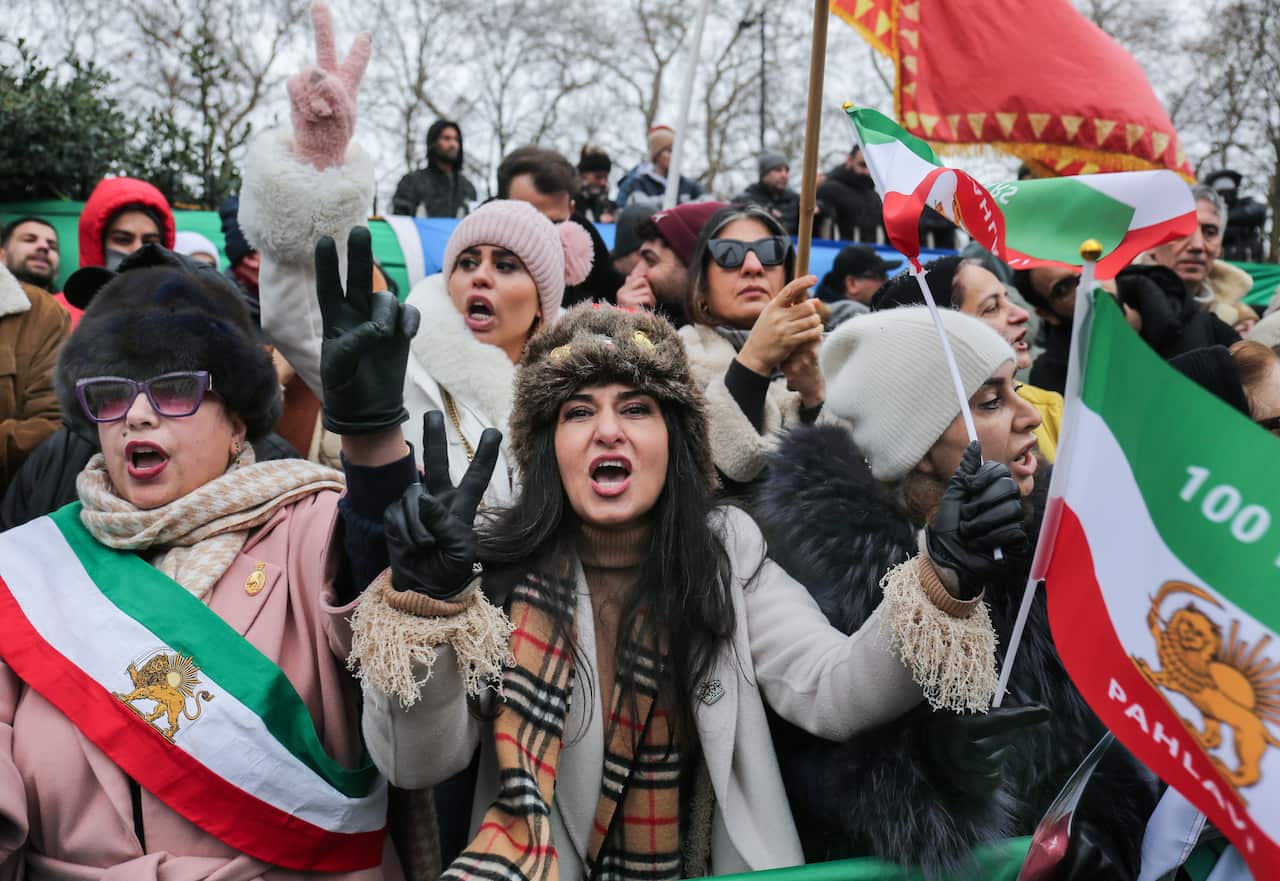
Londoners take part in a rally in solidarity with protesters in Iran, calling on the British government to support Iranians as anti-government protests continue Credit: Martin Pope / SOPA Images/Martin Pope / SOPA Images/Sipa USA
The Iranian foreign ministry said it had summoned diplomats in Tehran representing France, Germany, Italy and the UK, demanding they “withdraw official statements supporting the protesters”.
French President Emmanuel Macron, however, issued a statement later Monday condemning “the state violence that indiscriminately targets Iranian women and men who courageously demand respect for their rights”.