Key Points
- Iran and the United States are set to hold talks in Geneva on Thursday over Iran’s nuclear program.
- Experts predict reaching a deal will be challenging.
As Iran and the US renew negotiations over Iran’s nuclear program, a Middle East analyst says the world should be feeling “relatively pessimistic”.
Fears of military confrontations between the two longtime adversaries have been growing as the US continues a military buildup in the Middle East.
Iranian officials say they hold out hope for progress towards a deal to avoid fresh conflict, with Iran and the US expected to hold a third round of talks in Geneva, Switzerland, on Thursday.
Oman’s foreign minister Badr Albusaidi, who has been acting as a mediator in indirect talks, has described the upcoming talks as a “positive push to go the extra mile towards finalising the deal”.
While Iran has offered fresh concessions on its nuclear program to reach a deal with the US, a senior Iranian official also says the countries have differing views on the success of the negotiations so far and the roadmap for peace.
Here’s what both sides say, what may come next, and what this means for Australia.
What does Iran say?
Iran’s President Masoud Pezeshkian voiced cautious optimism on Sunday, saying recent negotiations had “yielded encouraging signals”, while pointing to his country’s readiness for “any potential scenario”.
Iranian authorities have said that a diplomatic solution must deliver economic benefits for both Iran and the US.
“Within the economic package under negotiation, the United States has also been offered opportunities for serious investment and tangible economic interests in Iran’s oil industry,” a senior Iranian official said.
A major point of friction between the countries remains sanctions the US has placed on Iran to curb its nuclear ambitions, according to the official.
“The last round of talks showed that US ideas regarding the scope and mechanism of sanctions relief differ from Iran’s demands. Both sides need to reach a logical timetable for lifting sanctions,” the official told the Reuters news agency on Sunday.
“This roadmap must be reasonable and based on mutual interests.”
Another point of friction between the two nations in indirect talks so far has been US demands for “zero enrichment”, with demands Iran relinquish its stockpile of highly enriched uranium, which it worries could pave a way for Iran to produce nuclear weapons.
Iran has rejected the demand, though is reportedly considering concessions such as sending half its highly enriched uranium abroad while diluting the rest, in exchange for the recognition of Iran’s right to “peaceful nuclear enrichment”.
Reuters reported Iran might soften its stance on supporting regional armed groups, despite previously publicly rejecting US requests to expand talks from nuclear issues to armed groups and Iran’s missile program.
What does the US say?
The US struck Iranian nuclear sites in June last year, following Israeli attacks on Iran.
Steve Witkoff, US President Donald Trump’s special envoy, said Iran had been enriching uranium “well beyond the number that you need for civil nuclear”.
“It’s up to 60 per cent [fissile purity],” Witkoff told Fox News on Saturday. “They’re probably a week away from having industrial, industrial-grade bomb-making material, and that’s really dangerous.”
The UN nuclear agency last year estimated that stockpile at more than 440kg of uranium enriched to up to 60 per cent fissile purity, a small step away from the 90 per cent that is considered weapons grade.
Witkoff added that Trump was “curious” about why Iran hasn’t “capitulated” and agreed to curb its nuclear program.
“I don’t want to use the word ‘frustrated’, because he understands he has plenty of alternatives, but he’s curious as to why they haven’t … capitulated,” Witkoff said.
Witkoff also said he has met at Trump’s direction with Iranian opposition figure Reza Pahlavi, son of the shah ousted in Iran’s 1979 Islamic Revolution, but did not provide further details of the meeting.
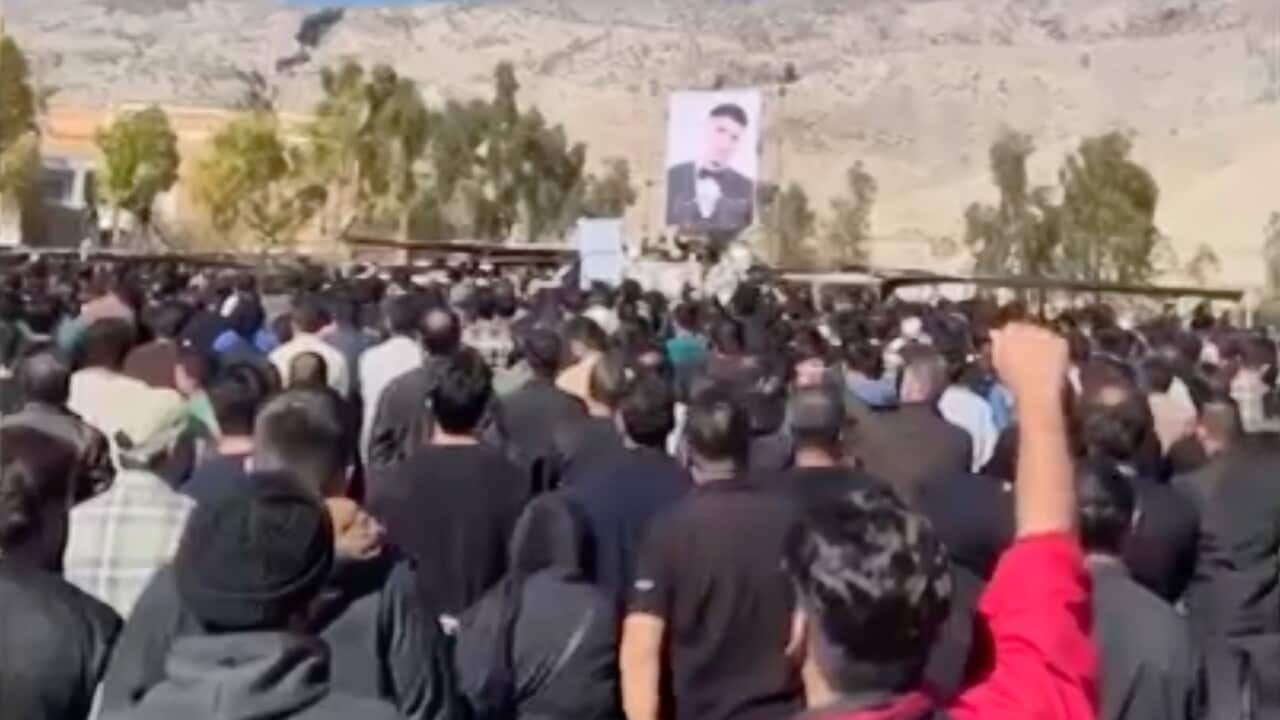
Pahlavi, who lives in exile, served as a rallying figure for some of Iran’s opposition during anti-government demonstrations last month in which thousands of people are believed to have been killed, the worst domestic unrest since the revolution era.
Earlier in February, Pahlavi said US military intervention in Iran could save lives, and urged Washington not to spend too long negotiating with Tehran’s clerical rulers on a nuclear deal.
What’s next?
Ahead of Thursday’s meeting, The New York Times reported that Trump would consider a much bigger attack on Iran in coming months, if diplomacy or any initial targeted strikes didn’t lead to Iran giving up its nuclear program.
Iran has threatened to strike US bases in the Middle East if US forces launch attacks on Tehran.
Middle East analyst Rodger Shanahan told SBS News that while the details around both sides’ tactics remain unclear, a deal on Thursday may be unlikely.
“President Trump’s been unclear on what his negotiation red line is, which is a normal negotiation tactic, and the Iranians have been similarly circumspect about what they’re willing to give,” he said.
“You’d have to be relatively pessimistic at this moment about whether both sides could come to a deal.”
He added that Trump’s threats of military strikes were likely real.
“This is also part of the negotiation tactic. He’s got sufficient assets in the region to do that, so it’s not an empty threat.”
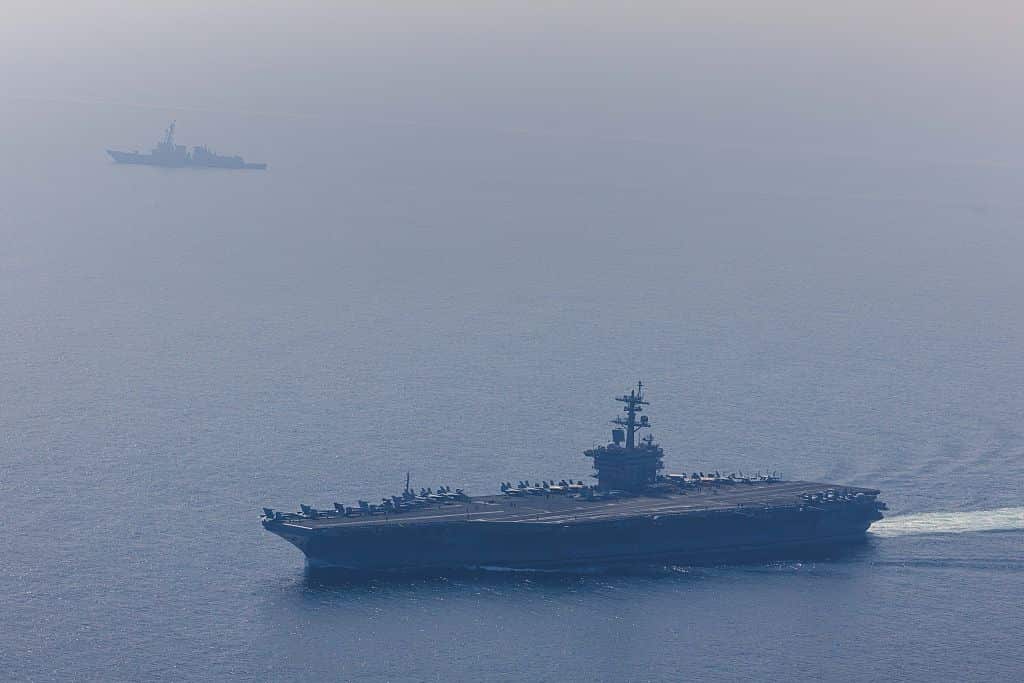
Dr Michael Green, chief executive of the University of Sydney’s United States Studies Centre, also told SBS News that while he saw challenges for the US and Iran to reach a deal on Thursday, both countries would seek to avoid the use of force.
“In the Iranian case, their military and geopolitical situation is quite weak. [They have had] the Israeli and US attacks on them, but also Israel’s attacks on Hamas and Hezbollah, the collapse of the Syrian government,” he said, adding that Iran is also losing its proxies in the region, while China and Russia aren’t backing it up.
He said Trump also faces challenges to win support from Congress over Iran. “The US can’t keep that fleet out there forever. It’s stressful and hard to keep it at sea.”
He believed the Thursday meeting would see both sides reach an outline of the deal: “But the devil’s in the details.”
What’s Australia’s stance?
Prime Minister Anthony Albanese has tried to tread a delicate line between supporting the US while not getting too involved in the dispute.
In June, when the US launched strikes on Iranian nuclear facilities, Australia backed US action, but also repeated calls for de-escalation.
Albanese didn’t confirm if Australia provided any military support or intelligence to the US for its strike on Iran, but confirmed it was a unilateral action by the US.
Shanahan said Australia should try not to engage in negotiations.
“I think the government would be wanting to say as little as possible about this issue, just because we’re not really involved in it,” he said.
On the other hand, Green said Australia might be brought into the conflict if it escalates into military action.
“For one thing, Australia is a very close ally of the United States, and in every previous war in the Middle East … Australia has always sent troops or ships or planes,” he said.
“I do not think Australia will be involved in a military strike this time, but there’s always some expectation that if the US gets in a major conflict, Australia will help.”
He said the impacts of Australia getting involved in the US-Iran conflict could be significant.
“Australia has its own problem right now with antisemitism and extremism, and when things become unsettled and unstable in the Middle East, as they were with Gaza, it can really impact things inside Australia,” he said.
He’s also worried about potential terror threats and economic impacts if Australia joins the US in its conflict with Iran.
“All those matter [to] Australia, even though it’s geographically far away.”
For the latest from SBS News, download our app and subscribe to our newsletter.