
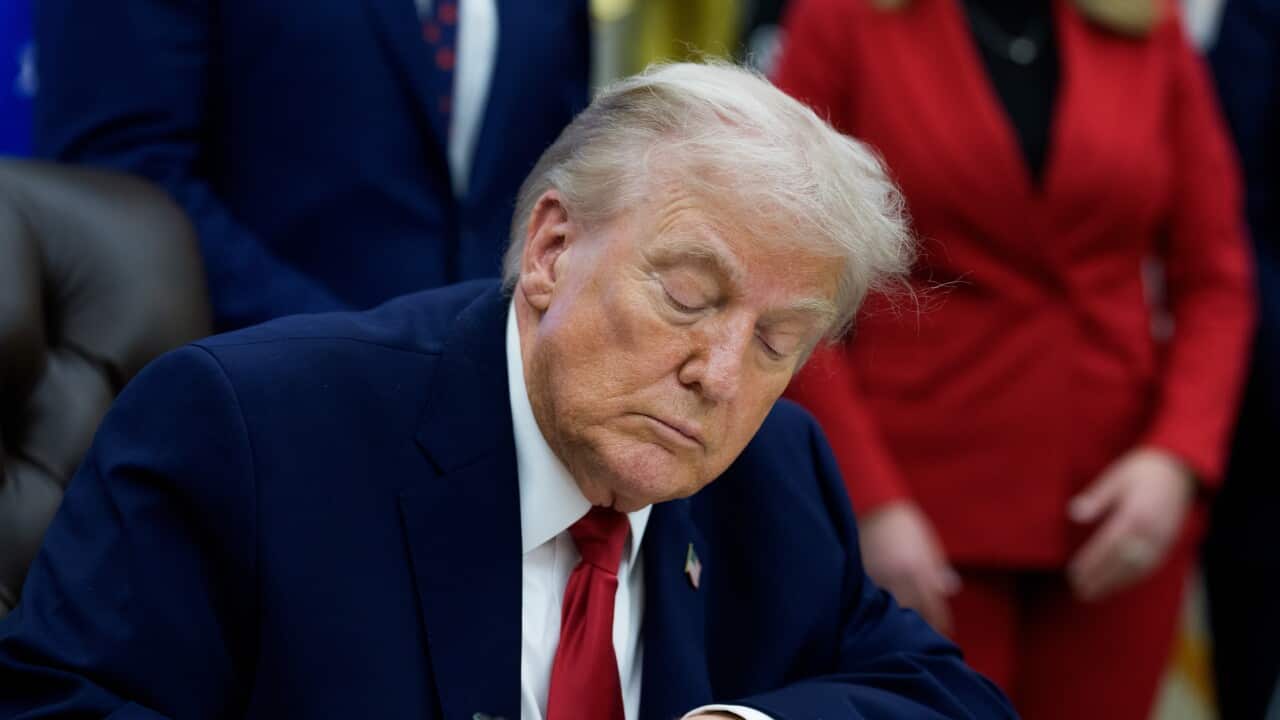
United States President Donald Trump has ordered the reopening of commercial airspace over Venezuela, ending years of flight restrictions and marking a major shift in US policy toward the country.
The decision follows direct engagement with Venezuela’s acting president, Delcy Rodríguez, weeks after US military action that led to the capture of former president Nicolás Maduro.
Trump has said he plans to “run” Venezuela, and has signalled desire for the US to take over the country’s oil production, though it’s unclear what this will look like long-term.
“We’re going to be opening up all commercial airspace over Venezuela,” Trump said overnight, adding that “American citizens will be very shortly able to go to Venezuela, and they’ll be safe there.”
Trump said he instructed transportation secretary Sean Duffy and US military leaders to lift the restrictions by the end of the day.
The Federal Aviation Administration confirmed it was lifting multiple airspace advisories it said were no longer necessary.
American Airlines announced plans to resume flights, becoming the first US carrier to move toward restoring direct service.
Trump described the security situation in Venezuela as “under very strong control,” while the State Department continued to warn Americans against travelling to the country.
Venezuela’s government did not immediately comment.
Why flights were grounded for years
Commercial air travel between the United States and Venezuela effectively stopped in 2019 after diplomatic relations collapsed amid Venezuela’s political and economic crisis deepening.
At the time, the US Department of Homeland Security (DHS) announced it was suspending “all commercial passenger and cargo flights between the United States and Venezuela” indefinitely.
“This determination is based on the ongoing political instability and increased tensions in Venezuela and associated inadvertent risk to flight operations,” DHS said in its 2019 statement, citing concerns for the safety of passengers, crew and aircraft.
The State Department also advised US citizens in Venezuela to leave the country if they could do so safely, “via any available means.”
The suspension coincided with intensified pressure from Venezuelan opposition leader Juan Guaidó, who publicly sought US assistance while calling for fresh elections.
Guaidó, recognised by the United States and more than 50 other countries as Venezuela’s legitimate interim president, pursued new strategies for political change as nationwide protests lost momentum and the US refused to rule out military action.
American Airlines said Thursday it would share additional details about restarting service in the coming months as it works with federal authorities on security assessments and required permissions.
“We have a more than 30-year history connecting Venezuelans to the US, and we are ready to renew that incredible relationship,” said Nat Pieper, American’s chief commercial officer.
Diplomatic signals beyond aviation
The airspace decision reflects broader efforts by the Trump administration to restore diplomatic engagement with Venezuela after years of severed ties.
Earlier this week, the State Department told Congress it was moving towards reopening the US embassy in Caracas, sending a growing contingent of temporary staff to carry out “select” diplomatic functions.
Despite Trump’s assurances on travel safety, the State Department has kept its highest-level travel advisory in place, warning Americans: “Do not travel,” citing risks including wrongful detention, torture and kidnapping. The department did not immediately respond to questions about whether the advisory would change.
Trump has also linked the reopening of airspace to renewed US commercial interest in Venezuela’s energy sector.
During a cabinet meeting, he said US oil companies were “going to Venezuela now, scouting it out and picking their locations,” without providing further details.
While the White House has said oil companies are eager to pursue new opportunities in Venezuela following Maduro’s removal, some in the industry have continued to express reservations about investing money and resources in the country.