In Brief
- The RBA said the surcharging framework — introduced more than two decades ago — is no longer achieving its intended purpose.
- Some 16 per cent of businesses are estimates to use surcharges.
Surcharge fees on debit and credit card transactions will be ditched later this year, despite strong opposition from businesses.
The Reserve Bank of Australia’s (RBA) review of merchant card payment costs recommended the fees be scrapped.
Business groups have criticised the move and said it would simply drive up prices and reduce transparency.
But the central bank said on Tuesday extensive public consultation had not dissuaded officials from making the move.
Which transactions will no longer attract surcharges?
Mastercard, VISA, and EFTPOS card transactions.
American Express has a separate agreement with the RBA and is not subject to these rule changes.
How much are consumers set to save?
About 16 per cent of businesses use surcharges, which are intended to cover the cost of processing a transaction.
According to RBA estimates, payment processing costs can range from under 0.5 per cent for EFTPOS to around 1-1.5 per cent for credit cards, with debit cards sitting in between.
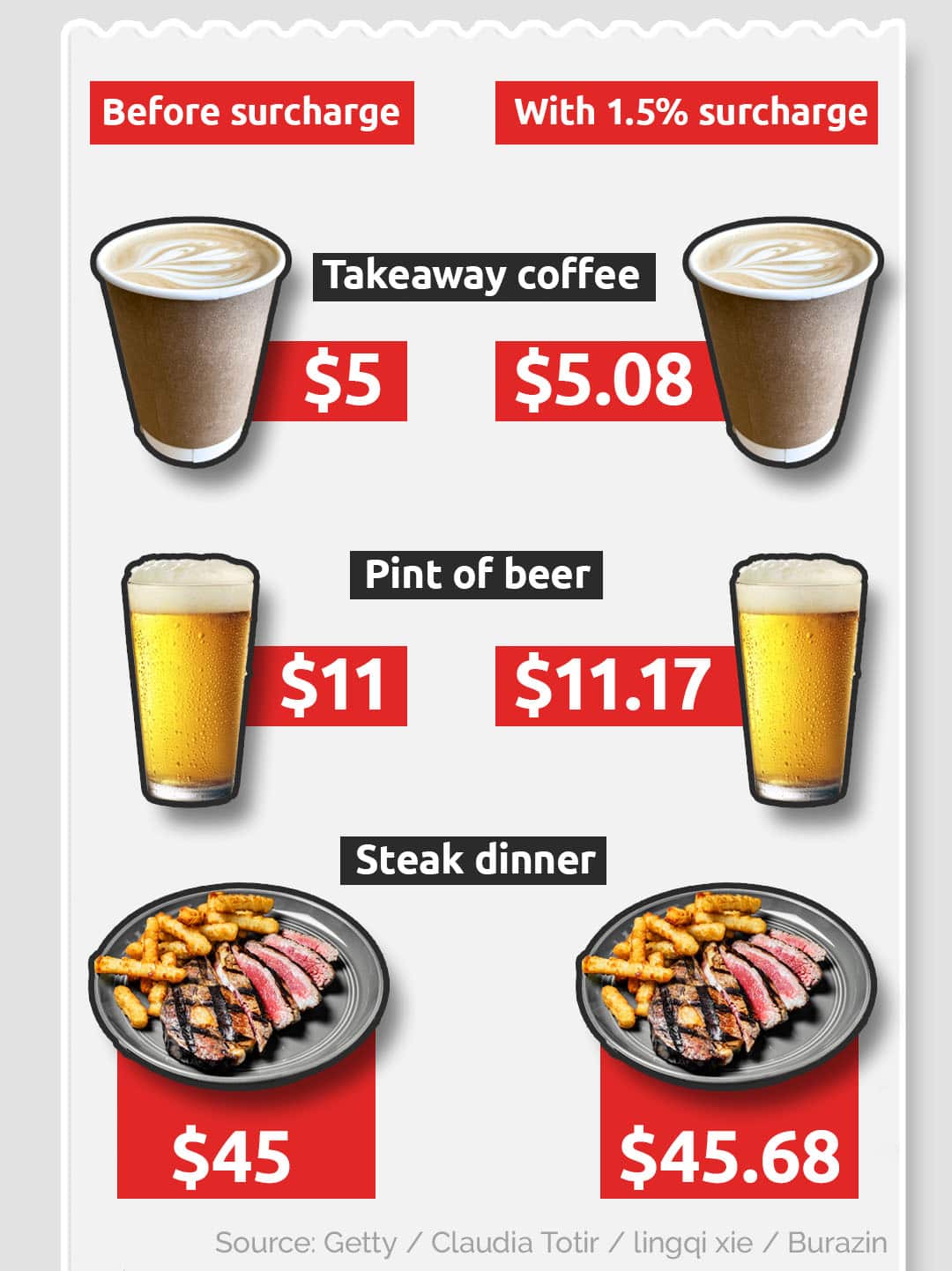
The RBA estimates the ban will save Australian consumers a collective $1.6 billion a year.
What could happen if there are no longer card surcharges?
Removing surcharges will mean the advertised price is the final price consumers pay.
For the estimated 16 per cent of businesses that surcharge, the price of their goods and services could increase as they incorporate these fees into their pricing.
Consumers would prefer payment costs be incorporated into advertised prices, according to the RBA.
What else is changing?
The central bank will also lower the caps on interchange fees paid by Australian businesses in a move that will lower costs by about $900 million and benefit small businesses the most, according the the RBA.
The fee is paid by a business to a customer’s card issuer when a transaction occurs.
When releasing the recommendations in July 2025, the central bank found small businesses would be $185 million better off under the changes, with 90 per cent of them benefiting.
Better transparency achieved by forcing card networks and large acquirers to publish what fees they are charging has also been recommended to foster competition between networks.
The central bank is also planning to start a public consultation in mid-2026 to assess public interest for regulating areas of the retail payment system that were not covered under this review, including mobile wallets and ‘buy now pay later’ services.
When will the surcharge ban take effect?
The surcharge removal will kick in from 1 October.
— With reporting by the Australian Associated Press and Reuters news agencies.
For the latest from SBS News, download our app and subscribe to our newsletter.