
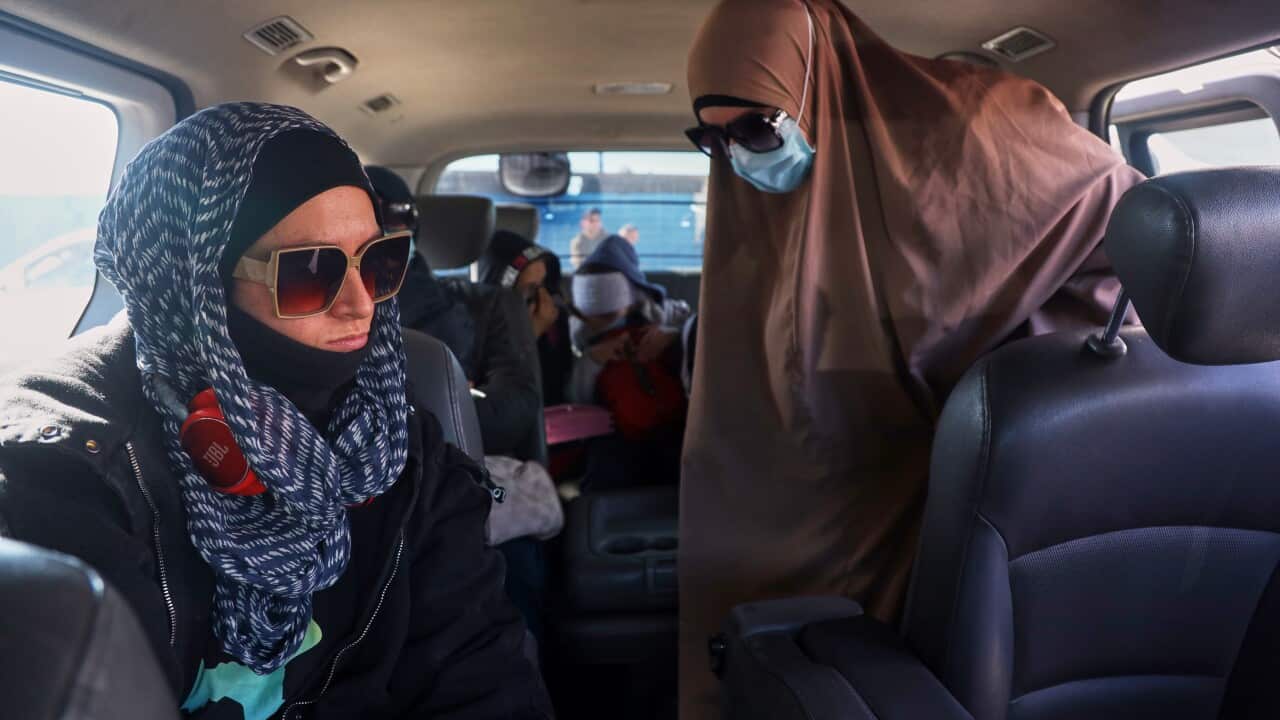
Prime Minister Anthony Albanese says a group of Australian women and children who have links to the self-proclaimed Islamic State (IS) group may face the full “force of the law” if they return home.
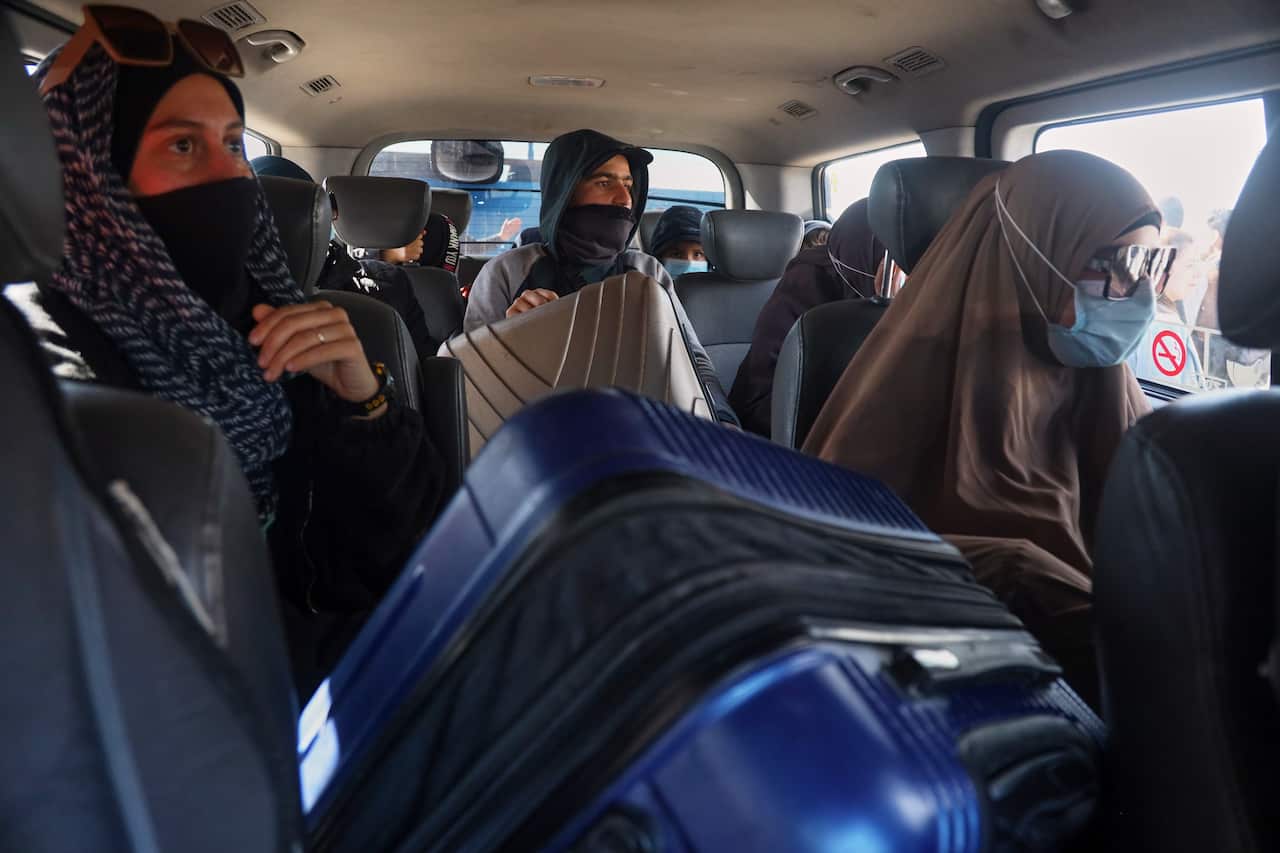
Thirty-four Australians who had been living in the al-Roj displacement camp in northern Syria for several years, and preparing to return to Australia on Monday, were instead brought back to the camp in what local authorities said were due to “technical reasons”.
Hukmiya Mohamed, a co-director of the camp, told Reuters the 34 Australians had been handed to members of their families who had come to Syria for the release. They were put on small buses for Damascus ahead of their departure from the country with a military escort, but were returned shortly after.
The Australian government “is not and will not repatriate people from Syria,” a government spokesperson said in a statement.
Who are the women in the group?
The women had travelled or were taken to Syria to become partners of IS group members and have been living in the displacement camp after the collapse of the IS group in 2019.
The women are often referred to as ‘ISIS brides’, given their perceived or real links to IS group fighters.
Among those believed to be in the group is Kirsty Rosse-Emile, a Melbourne woman who travelled to Syria with her husband Nabil Kadmiry, who was stripped of his citizenship in 2019.
Another woman from Melbourne, Zahra Ahmad, told SBS Dateline some women “had no choice but to follow” the men in her family who chose to join the IS group.
At the camp, she and her kids and 12 other Australian mothers sleep in tents next to an oilfield.
Over a dozen children are among the cohort.
Save the Children, which launched an unsuccessful legal bid against the government to repatriate the group, has expressed concern for the children’s well-being.
“These kids haven’t even seen a tree,” CEO Matt Tinkler told Dateline last year.
“They’re innocent Aussie kids, and they deserve to be home.”
Syrian government forces seized swathes of northern Syria from the Kurdish-led Syrian Democratic Forces in January. They took over prisons and camps that housed IS fighters and their families from the Kurdish forces.
This came a year after the fall of the Assad regime.
Al Roj camp, where the Australians live amongst 2,000 others, remains in the hands of the Kurdish forces, but the US believes it too will be taken over by the Syrian government.
Is the government helping them return to Australia?
The Australian government insists it’s not helping them.
“We have a very firm view that we won’t be providing assistance or repatriation,” Albanese told ABC News.
“My mother would have said: ‘If you make your bed, you lie in it’. These people went overseas supporting Islamic State and went there to provide support for people who basically want a caliphate.”
However, the government has previously said as Australian citizens they have entitlements that are not discretionary under law.
Last year, a group of six women made their way to Australia without the support of the government, after obtaining passports from Australia’s Beirut embassy.
This is the same path the latest group are believed to be planning to undertake.
Liberal senator Sarah Henderson said they should not be returning to Australia.
“If these are people who subscribed to ISIS ideology, who subscribed to this extremist ideology, they should not be returning to Australia,” she said.
She said the government could make security assessments, or impose temporary exclusion orders.
“We need to ensure these adults do not pose a threat to Australia.”
What will happen to them if they return to Australia?
Albanese said while it was unfortunate that children were caught up in it, Australian law will apply if necessary.
“We want to make it clear, as we have to the people involved, if there are any breaches of the law, they will face the full force of the Australian law.”
A group of women and children who had been repatriated by the government in 2022 were subject to voluntary orders, but some were not required to wear ankle bracelets, nor were they subject to terrorism control orders, reportedly because there was no legal basis for it.
However, some were interviewed by police upon their return.
A government spokesperson said Australian security agencies have been monitoring, and continue to monitor, the situation in Syria to ensure “they are prepared for any Australians seeking to return to Australia”.
“The safety of Australians and the protection of Australia’s national interests remain the overriding priority.”
The statement echoed Albanese’s claims that people will be met with prosecution if they have committed crimes.
For the latest from SBS News, download our app and subscribe to our newsletter.