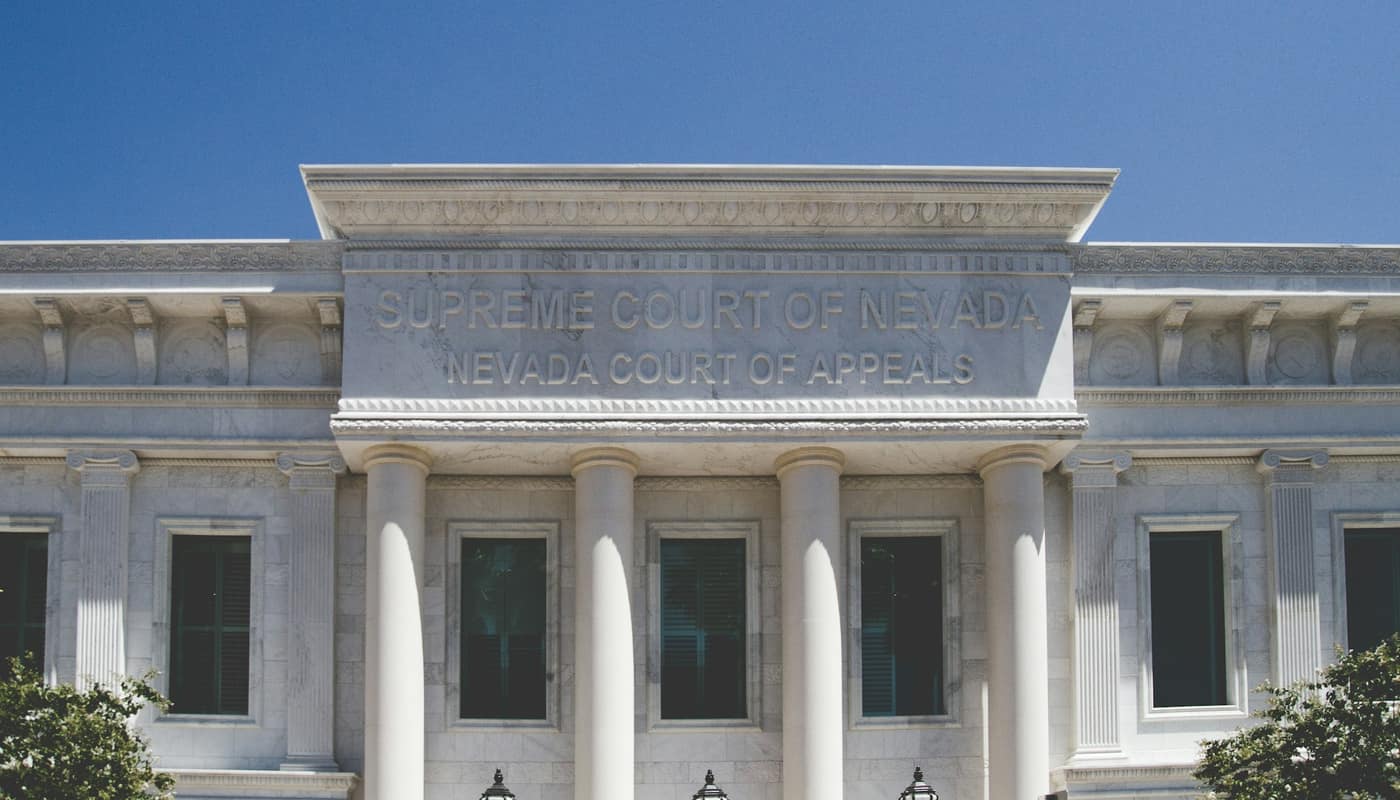
Headlines about the Supreme Court usually focus on the rulings. The step before a ruling, the Court’s decision to take a case at all, shapes the national legal agenda just as much. This article explains how that selection works, using the federal judiciary’s own descriptions of the process.
Most Supreme Court cases are optional
For the most part, the Supreme Court does not have to hear the cases brought to it. According to the federal judiciary’s educational materials, the Court mainly chooses its cases through petitions for a writ of certiorari. A writ of certiorari (pronounced roughly “sur-shee-uh-RAIR-ee”) is an order asking a lower court to send up the record of a case so that the higher court can review it. In everyday terms, a petition for certiorari is a request for the Court to take a second look.
Because the Court usually has discretion, it can decline. The federal judiciary says the Court typically takes cases that could have national significance, that might harmonize conflicting decisions among the federal appeals courts, or that could have value as precedent. A precedent is an earlier ruling that courts treat as guidance in later, similar disputes.
This is a different role from the one played by trial courts and ordinary appeals courts, which generally must decide the cases that properly come before them. For a broader look at how those systems fit together, see this explainer on federal courts versus state courts.
How many petitions arrive, and how many are accepted?
The numbers show how selective the process is. According to the federal judiciary, the Court accepts roughly 100 to 150 of the more than 7,000 cases it is asked to review each year. The Supreme Court’s own description of its work says the Justices review approximately 130 petitions each week in deciding which cases deserve full review with oral argument.
A separate federal judiciary page on the courts of appeals offers a related data point. It says that 10 percent or fewer of appellate decisions are appealed to the Supreme Court, and that the Court hears oral arguments in fewer than 100 cases a year. The two descriptions use different measures, so the figures should not be added together or compared directly. Taken together, they point in the same direction: for the great majority of litigants, the court of appeals or the state’s highest court is the last stop.
| Figure | What the source says | Source |
|---|---|---|
| Petitions received | More than 7,000 a year | Federal judiciary |
| Cases accepted | About 100 to 150 a year | Federal judiciary |
| Weekly review | Approximately 130 petitions | Supreme Court |
| Appellate decisions appealed | 10 percent or fewer | Federal judiciary |
| Cases argued | Fewer than 100 a year | Federal judiciary |
These are descriptive ranges from the sources named. The exact count varies from term to term, and other reference sources give somewhat lower counts of cases accepted, in the range of 80 to 100.
What does the four-vote rule mean?
Nine Justices sit on the Court, and a majority is five. Yet a case does not need five votes to be heard. According to the federal judiciary, four of the nine Justices must vote to accept a case. Practitioners often call this the “rule of four,” a longstanding practice that some reference sources note is not spelled out in the Constitution or a statute.
The rule matters because it lets a minority of the Court put a question on the docket, the list of cases scheduled for decision. A group of four can ensure that a case gets full briefing and argument even if the other five would prefer to leave it alone. Deciding the case’s outcome is a separate step, and that takes a majority.
Who reviews the petitions, and how?
Petitions do not go straight to the Justices’ desks in a pile. The federal judiciary explains that law clerks, the lawyers who assist each Justice, write memoranda and recommendations on petitions. Those summaries feed into the Justices’ Conference, the private meeting where petitions are typically the first order of business.
The Supreme Court’s own page adds a timing detail. On Fridays during and before argument weeks, the Justices meet privately to discuss argued cases and to vote on petitions for review. The Court also says the Justices continue to analyze new petitions during the summer recess, so the work does not stop when arguments do.
No jury or witnesses are involved at this stage or at the argument stage. The Court, according to its own description, works from a record of prior proceedings and printed briefs.
Which kinds of cases tend to get picked?
The federal judiciary’s description gives three broad signals: national significance, conflicting rulings and precedential value. The middle one deserves a closer look because it is a common reason in practice.
The country is divided into regional federal appeals circuits, and each circuit’s decisions bind the courts within it. When two circuits answer the same legal question differently, federal law can end up meaning one thing in one part of the country and something else elsewhere. Lawyers call this a circuit split. The Supreme Court is the only court that can settle such a question for the whole country, which is why a split is often a reason for the Court to step in.
Cases typically arrive from a U.S. Court of Appeals or from a state’s highest court, the latter when the state court has decided a constitutional issue, according to the federal judiciary. That second path is why some disputes that began under state law end up before the nation’s highest court.
What happens after the Court says yes?
Once the Court accepts a case, it goes on the docket and both sides file written briefs. The federal judiciary says these briefs can run up to 50 pages each. Oral arguments, held in public, take place from October through April. According to the same source, the October through December arguments happen during the first two weeks of each month, and the January through April arguments happen during the last two weeks.
After deliberation the Justices vote, and a majority must agree on an opinion. The federal judiciary says opinions are typically released by the last day of the term, which falls in late June or early July. Unanimous decisions often come out sooner, and releases in May and June occur at 10 a.m. on Mondays.
In short, a case that is accepted in the fall may not be resolved until the following summer.
Does a denied petition mean the Court agrees with the lower court?
Not necessarily, and this is one of the most commonly misread parts of the process. The sources reviewed here describe the Court’s choices as discretionary and based on broad factors such as national importance and conflicts among lower courts. They do not describe a denial as an endorsement of the lower court’s ruling.
There are many reasons the Court might pass on a case without reaching the merits, the underlying question of who is legally right. The question may not yet have matured across different courts, the case may be a poor vehicle for answering it, or the issue may be less significant than others on the docket. The sources reviewed here do not itemize reasons for individual denials, so a reader trying to interpret one should treat any single explanation as an inference unless the Court itself states a reason.
Because the Court usually does not explain its denials, news coverage of a denied petition is best read as reporting that the lower court’s decision stands for that case, not as a statement about whether the Justices agree with it. That distinction is similar in spirit to the one drawn in this guide on telling news reporting from opinion: the reader should separate what happened from what someone says it means.
How Congress and the Court fit together
The Court’s discretion over its docket is not an accident of habit. The federal judiciary describes it as the usual arrangement, and the Constitution and federal statutes set the basic framework within which the Court operates. When a case turns on how to read a statute, the decision rests with the Justices, but the law itself comes from Congress. How lawmakers write and pass those statutes is covered in this explainer on how a bill becomes law. A ruling that disappoints one side can sometimes be addressed by new legislation, though that depends on the subject and on whether the case turned on a statute or on the Constitution.
Reading a docket headline with the process in mind
A few questions help make sense of Supreme Court news:
- Was the case accepted, or is it only a petition? Many headlines concern petitions that have been filed. Most petitions are not accepted, based on the figures above.
- Is the story about a vote to hear the case or a ruling on the merits? These are separate stages, often months apart.
- Is there a stated reason? Unless the Court has written something, reasons for acceptance or denial are usually inferences by commentators.
- When could a decision come? For a case argued during the term, opinions typically arrive by late June or early July, according to the federal judiciary.
Conclusion: a narrow gate with a long-lasting effect
The Supreme Court’s selection process is narrow by design: thousands of petitions, roughly a hundred or so accepted, and a four-vote threshold that gives a minority of the Court the power to open the door. The choice of cases, as much as the decisions themselves, determines which legal questions the whole country gets answered. Knowing the difference between a petition, a granted case and a ruling makes the news easier to follow.
This article is a general explanation of how the court system works, not legal advice or an endorsement of any position.
Sources: United States Courts; Supreme Court of the United States